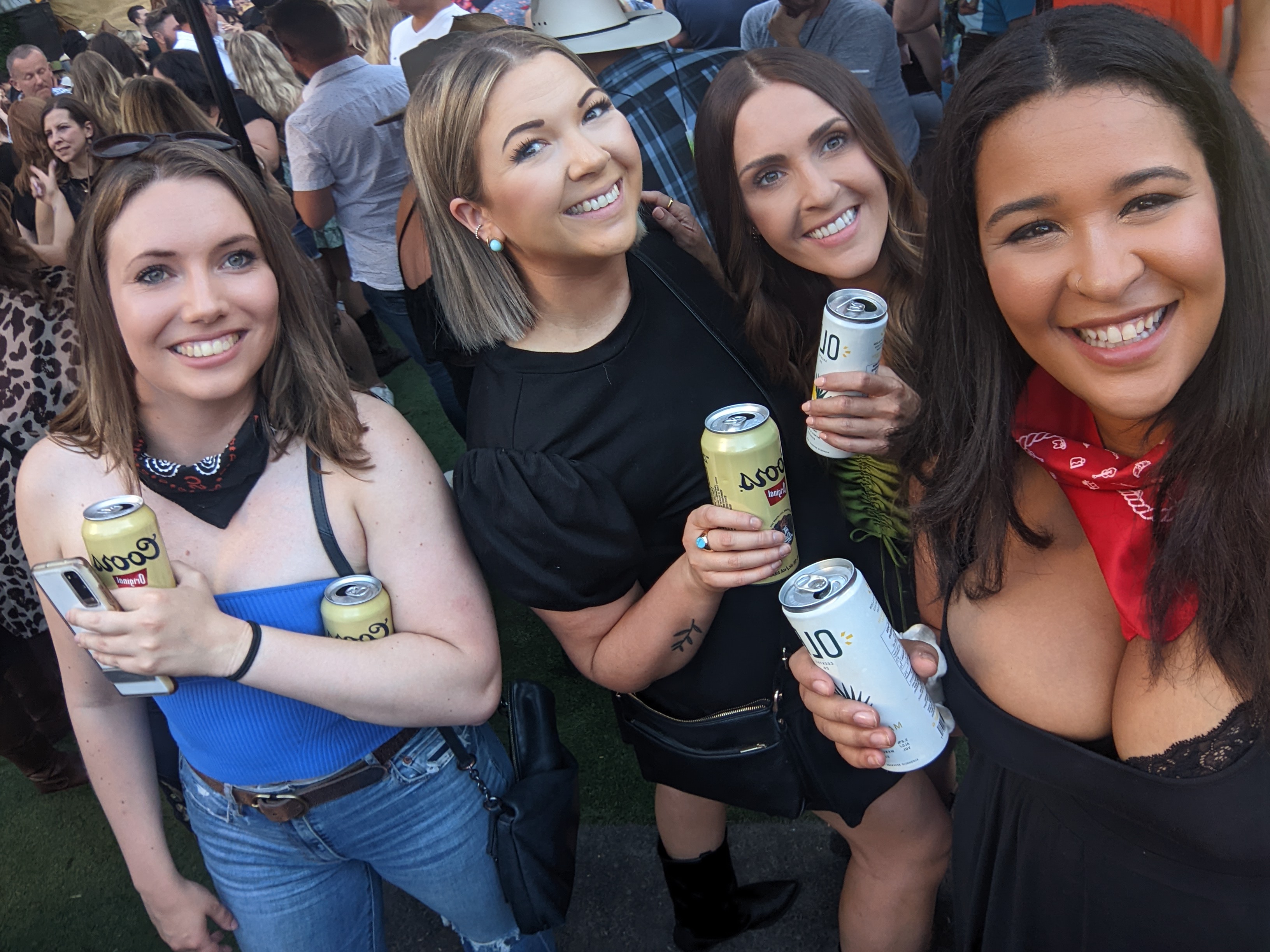
Is there really racism in Canada?

The past few weeks have been a bit of a roller coaster of emotions for me, particularly regarding the racial injustices that black people continue to experience in the United States, and have caused me to reflect on my own experiences throughout my life.

Back in the 1980s, my parents did not have much support for their relationship from either side of their families. My dad, originally from Grenada, met my Hungarian mother at the Calgary Tennis club, 36 years later they are still married and very much in love.
If anyone has seen the movie “Save the last dance” imagine Kerry Washington’s character explaining to Julia Stiles all of the reasons why she[Julia] shouldn’t be with her brother, this is what my dad’s side of the family felt about him being with a white woman.
On my mother’s side, there were several comments of racial stereotypes that were shared with my parents, upon the announcement of their engagement. One in particular stood out from the rest; “You’re too sensitive to have mixed children”. Now, as one of their mixed children, it took me many years to really grasp what was really being said: “Your children will not be treated as well as you have been, and it is going to be hard”.

In my childhood, I attended french immersion catholic schools in Calgary, Alberta. I’d like to point out that the lack of diversity in my schools were so prevalent that to this day I can count how many other visible minorities were in my primary and high school on both hands. I grew up being picked on because I had my hair in braids most of the time which was gross according to my peers and on the rare occasion that my hair was out, I was told it was an ugly mop and one day they went a step further and punched me in the nose. Fun fact: I was in just as much trouble as the little white boy who gave a bloody nose and was told it would be on my permanent record.
As a young child I never really understood why I was singled out for my hair, or why comments on my skin color being darker but not “too dark” made me so uncomfortable. I finally begun to understand why these comments didn’t sit right with me, as a young teen. One day, as I was walking down the street after a concert with a few white friends and had 4 older white men yell out “White Power” from the other-side of the street, suddenly it dawned on me that these racist actions were because I looked different, and I was half black. It didn’t take me long to discover that the “less black” I looked, the more white (better) I would be treated.

I began to expand my social circles in high school and university; my friends would refer to me as an Oreo because I didn’t really count as black, or as the token black friend or announce that they weren’t racist because they were friends with me. Now, I realize how innocent these comments might have seemed, but they truly were micro aggressions that left a lasting mark on me. As a result, I began to keep my hair straight and assimilate, in hopes that the comments would stop if I no longer stood out.

Would it surprise you to know that question I have been asked most in my life has been “What are you?” or “Where are you actually from?” The next question or comment often is about my hair “Wow, I didn’t know it could get so straight”, or “it’s a bit wild today you should tame your nappy hair” and of course “It feels so soft and bouncy” – from people who physically reach out and touch my curly hair without any permission from me at all. You read that right – strangers, coworkers, acquaintances, feel that it is appropriate to touch my curly hair without out my consent. Now, I would love to tell you that I have been able to stand up for myself and tell these people that this behaviour it is not okay, but there has always been this underlying fear that I will suffer a consequence as a result.

For example, I had many educated and worldly friends who had no issue using the “N word” openly around me, and when I would speak up, many of them would spout their justifications. They would tell me that it’s “just a word “and if rappers are using it than so can they. The idea that I was offended by their uses of this word was unfathomable and dismissed because I “didn’t really count as a black” person, I am only half and I like to listen to country music. I can honestly say that I have lost friends over the years because they felt my ask to not use that particular word was completely unfounded.

Working in my university bar, I had patrons call out ” Sheniqua or Tenisha” to get my attention as the only black woman behind the bar, because in their mind yelling out a random “Black sounding name” was an okay way to get my attention. I laughed it off because not one person in the room had a problem with this. Some men who have talked about getting their “black card” by dating me, so openly and without shame, while others who have come from such white privilege that they can’t possibly understand or believe that I have been treated differently in my life. That seeing mixed race women in movies and in TV shows, even commercials as an adult has been amazing for me personally, because when I was growing up there were no adults that looked like me, I felt like the minority among minorities.

In my experience in the corporate world, I have had coworkers that had only spoken to me on the phone discover my ethnicity at a later date and comment that I was so “well-spoken” that they assumed I was white. I have worked in a department of close to 100 employees with a total of 3 other people of colour throughout my employment, where I had a direct supervisor tell me that the way that I carry myself was “too much”, make comments about my hair, my body type and that I needed to fit in with the culture because “Corporate Toronto is a small place and my reputation would follow” if I didn’t fall in line.

This last one in particular, echoed Sasha Exeter’s experience with Jessica Mulroney. The fact that anyone in a position of power and privilege feels so comfortable making threats to a person of colour’s career and livelihood is a prime example of the racsim that unfortunately is very common in Corporate Canada. Why have so many people of colour not spoken up in these situations? First of all, it needs to be said that threatening anyone is a problem, but here’s another layer in this situation: to have a white supervisor/person of power feel so confident that their words hold more power than that of a person of colour that they can threaten them, creates a sense of fear that we don’t obey they have the power to ruin your life. I am so grateful that Sasha Exeter chose to speak up and share this experience because truly it is not okay and has made me feel less alone in the experience. Touching my curly hair, especially in a corporate setting is not okay, and yet somehow because I am “exotic” and not white, I have to explain to coworkers and supervisors that my natural hair is not on my head for them to touch as they please.

I am not here trying to tell you that the level of racism and violence that has been occurring in the United States is remotely the same as what I have experienced and observed around Canada, but I do want you to know that there IS racism in Canada, but it is so systemic and often unconscious that many wonderful, loving people who really do mean well, are part of the problem.

I won’t sit here and tell you what to do, and I have seen a lot of performative things on social media that I don’t personally feel are genuine, but I really do believe that any real change starts at home. So if you really want to make a difference; educate yourself, read books from credible authors, watch documentaries, learn about systemic racism (I am happy to make a few recommendations). Unlearn some of these unconscious judgments and stereotypes that have been hammered into us and be the change you want to see in the world.

Why dresses every damn day?

Who am I?

  • My name is Vanessa, and I was born and raised in Calgary, Alberta (yes, I adore country music).
  • My father hails from Grenada and my mother is Hungarian (What a unique mix, I know!)I was a Rotary exchange student after high school and lived in Ankara, Turkey for a year.
  • I have a degree in Communications from the University of Calgary that included a group study program travelling through Spain studying the Spanish culture through food.
  • I moved to Toronto for my dream job in 2017, allowing me to travel the world and lost it due to a pandemic you might have heard of.
  • I had a fantastic little brother who constantly challenged me, questioned why my dating life consisted of foreigners with funny names and completed suicide in 2019.
  • I have experienced great, passionate love, friendship and heartbreak, just as any of you.
  • I am also as open as they come (total oversharer – thanks mom!), and I really do wear dresses every damn day (yes, that includes all winter long).

So why did I decide to start a blog?
My intention is quite simple; I hope that by sharing my experiences I can help even one person feel a little less alone and maybe laugh a little too.

Why the Calgary Stampede Is Still My Favourite Time of Year (The 2026 Deep Dive)

A few years ago I wrote about why the Calgary Stampede is my favourite time of year, and I stand by every single word. But I was a baby blogger back then, and honestly, I rushed it. So consider this the director’s cut. The grown-up, fully-caffeinated, “I have now done Stampede from basically every angle a person can” version.

Quick refresher for the new folks here: I was born and raised in Calgary, spent my first 26 years there (with a detour to Turkey and a semester in Spain), and I have now lived in Toronto for almost nine years (Gasp*). And every single July, like clockwork, my whole body remembers what the first week of the month is supposed to feel like. The thing about leaving the place that made you is that you stop taking its weird, wonderful traditions for granted. So let me try, one more time, to put 10 days of organized chaos into words.

First, the basics: when, where, what

The 2026 Stampede runs July 3 to 12 (Sneak-a-peek starts Thursday, July 2nd). Ten days. The official kickoff is the Stampede Parade on the morning of Friday, July 3, and this year the Parade Marshals are Team Canada Olympians Courtney Sarault and Mikaël Kingsbury (a very fun, very Canadian choice).

Hot Tip: If you go to the parade, you can walk straight to Stampede Park afterward and get in FREE from 11 a.m. to 1 p.m. Free admission to the Greatest Outdoor Show on Earth is not a thing you leave on the table.

Daytime is for the rodeo (1:30 p.m. every day) and the midway, which is exactly the artery-clogging, slightly-sketchy-ride, beer-garden-adjacent fairground experience you want it to be. Evenings are for the Evening Show at 7:15 p.m., which I will get to, because it deserves its own moment.

The community spirit

Let me remind everyone that Calgary is best described as the lovechild of Texas and Florida, except with free healthcare. And watching that city come together to dance, drink, and celebrate year after year is one of the most genuinely beautiful things I know.

I have done Stampede as a kid, a teenager, a bartender, a corporate event planner, a sponsor, an attendee, a passenger in the parade and just a regular ol’ guest. Every version is a good time. A few things that make the community spirit real:

The breakfasts. Free pancake breakfasts pop up all over the city for 10 straight days. My little brother and his friends used to map out a route to hit as many as humanly possible. Most are pancakes and juice. The overachievers bring bacon, eggs, sausages, mimosas, and caesars. Plan accordingly.

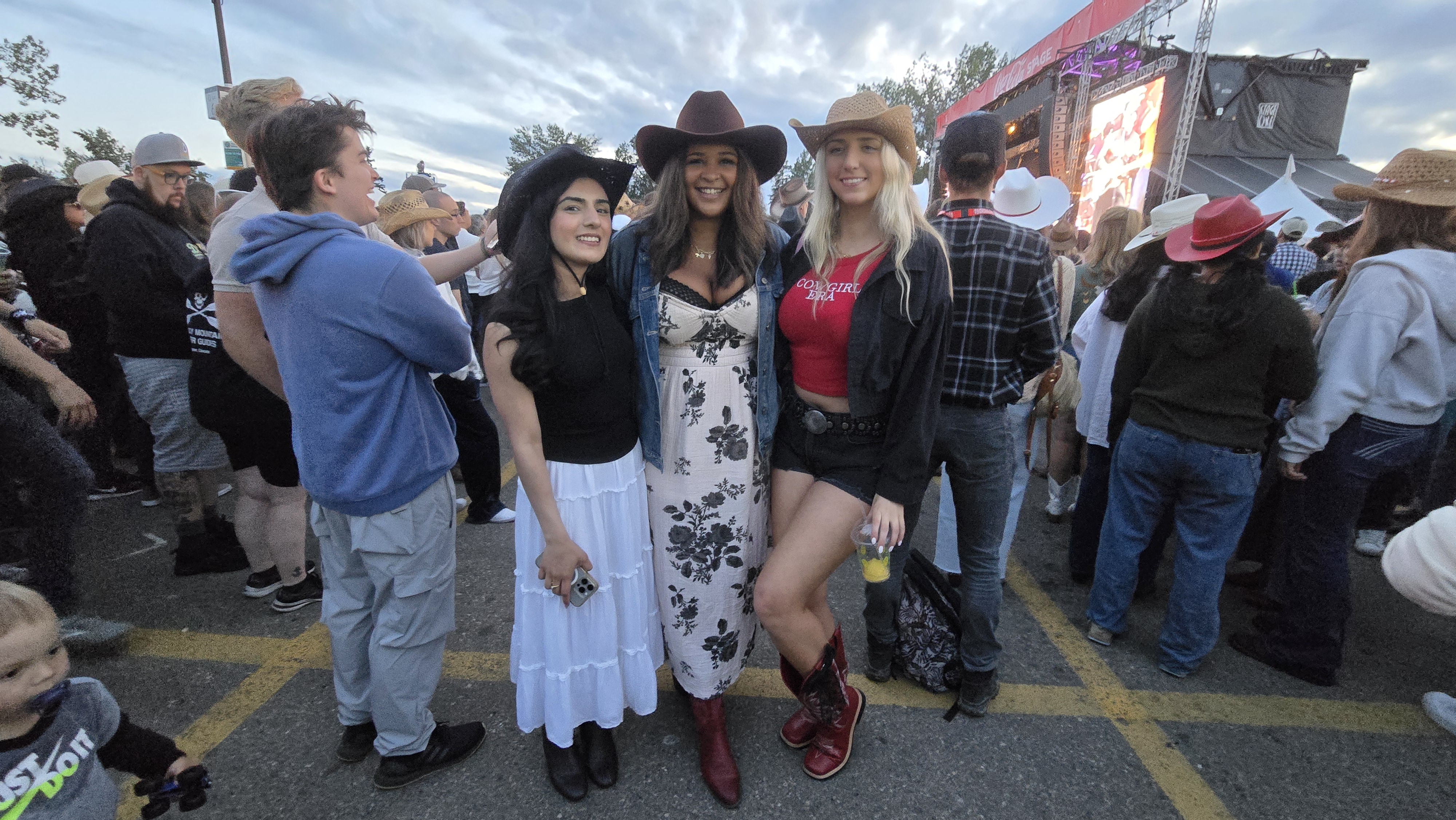
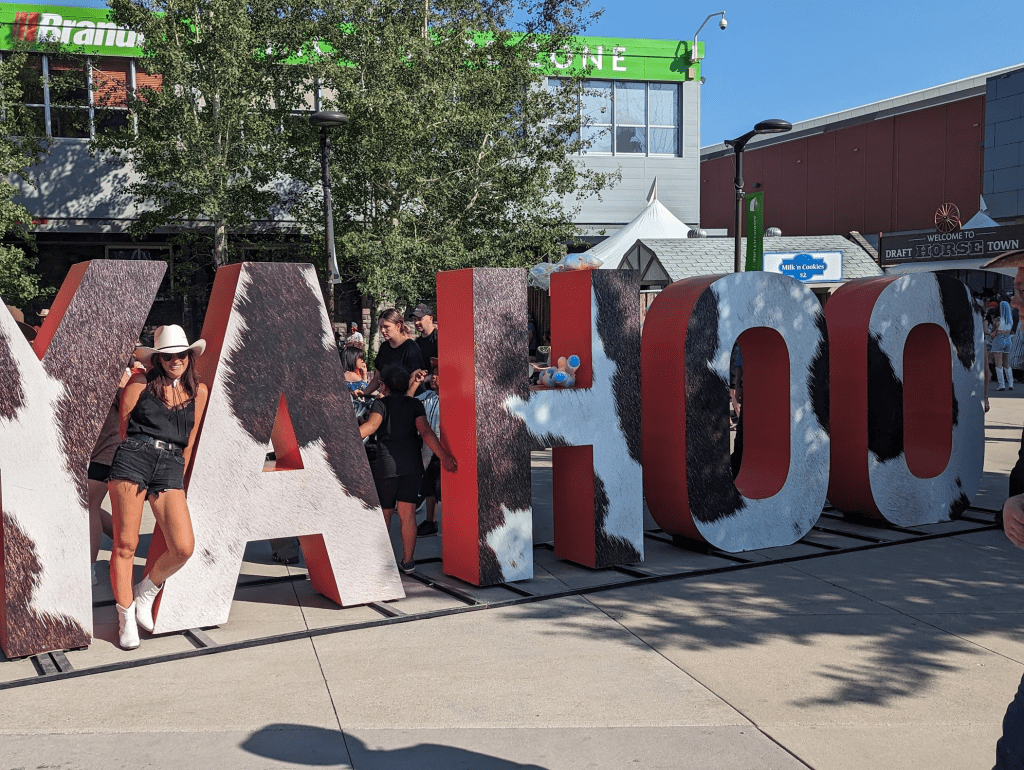
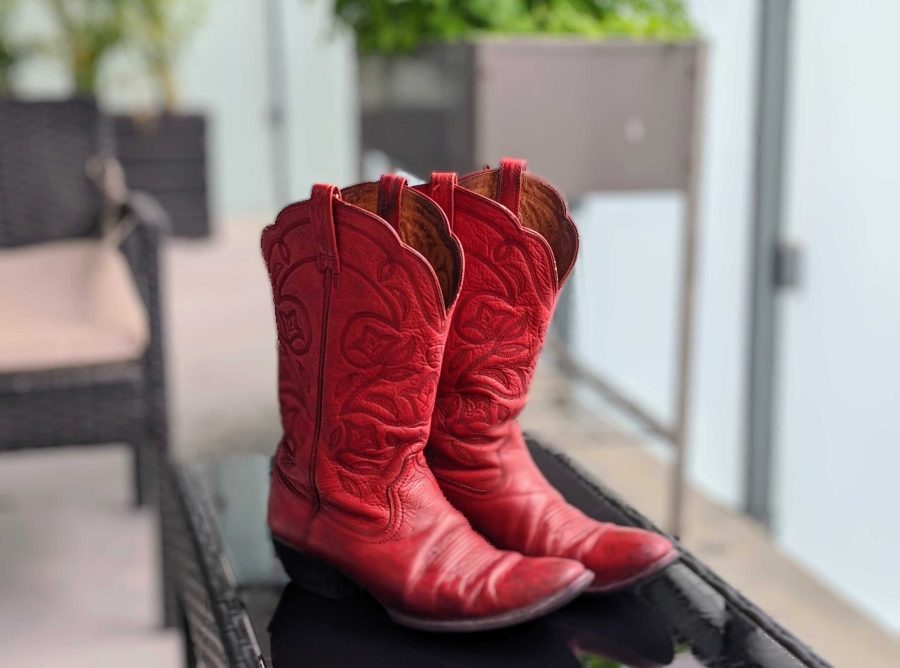
The uniform. Cowboy hats and boots everywhere, and most importantly the white cowboy hat with the red band, which is basically Calgary’s flag. As for my uniform, it’s a sundress or denim dress and cowboy boots.  

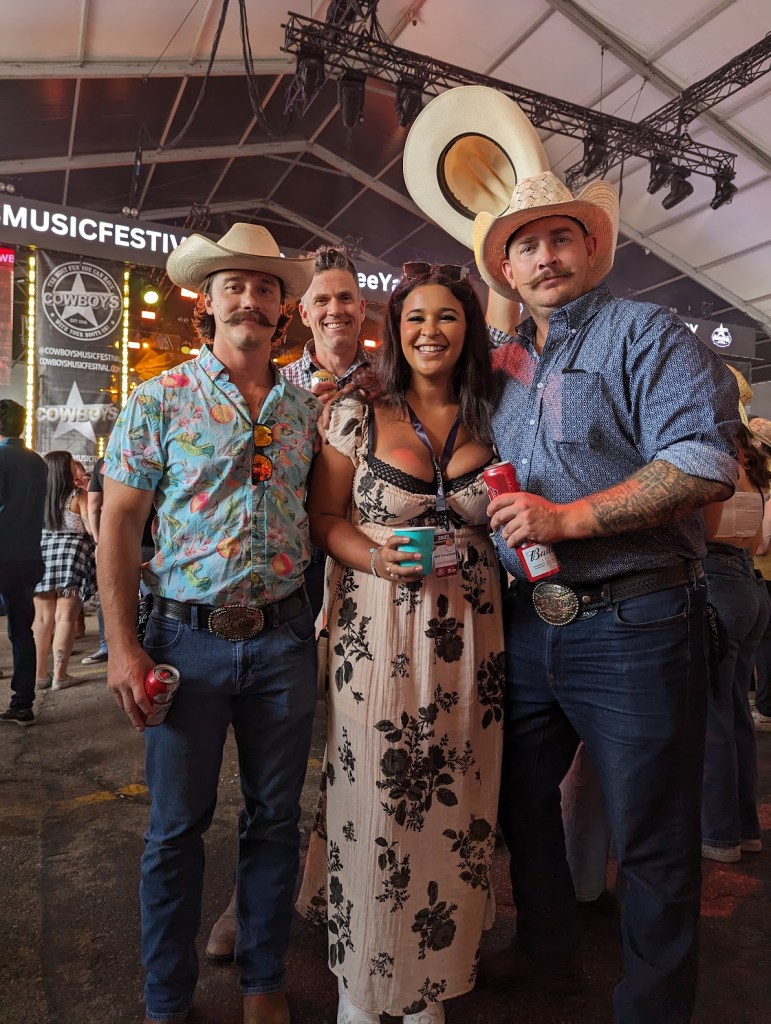
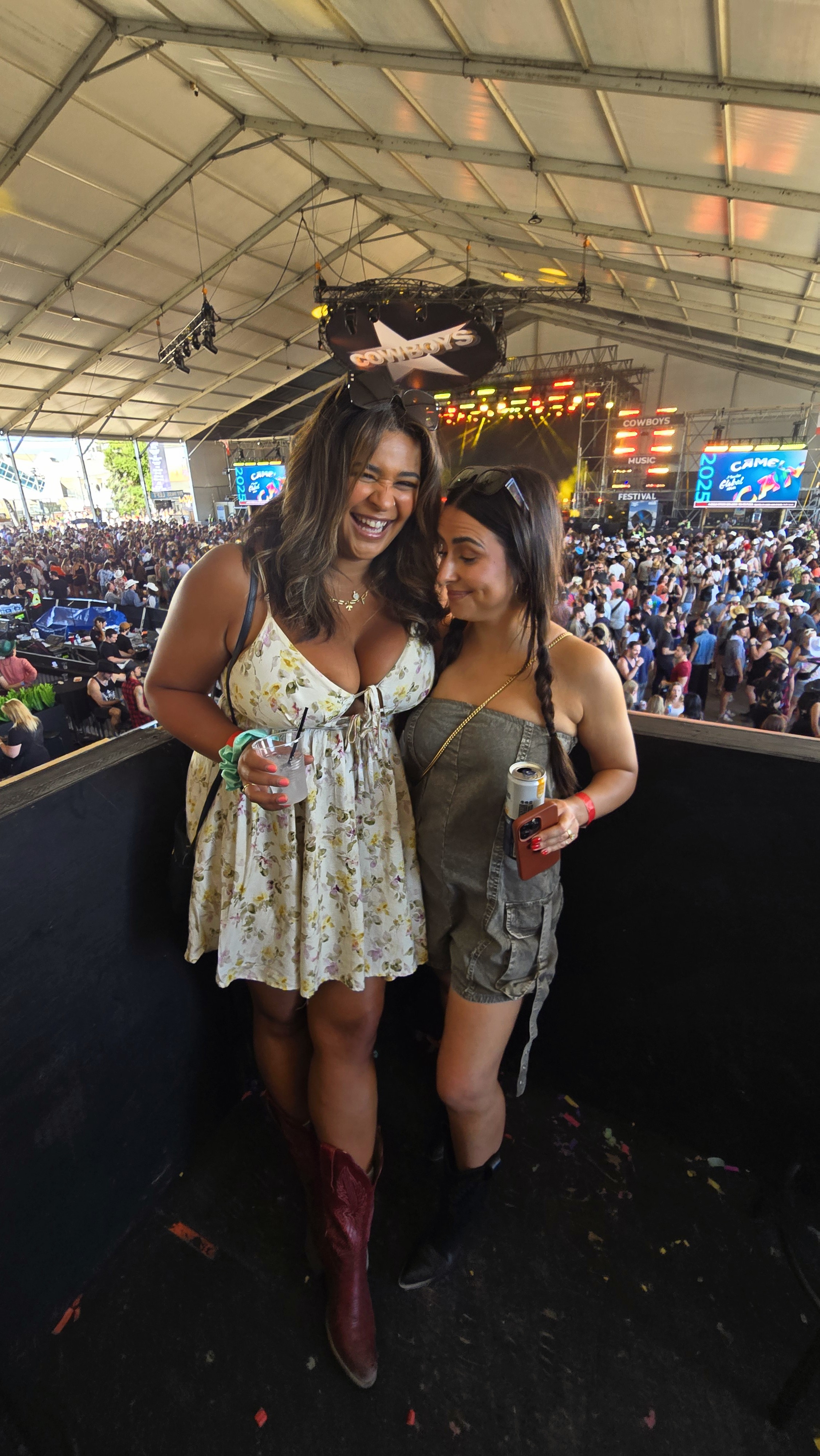
The corporate parties. I will say it plainly: a good Stampede work party beats any holiday party I have ever attended. My old stomping grounds were Cowboys and Ranchman’s, and the energy is just different.

Come hell or high water. After the 2013 flood devastated the city core and the Stampede grounds, thousands of volunteers showed up to make sure the show went on anyway. I watched it happen. It is the single best argument for what this city actually is underneath the hats.

The music

If you know me, you know I love country music. I do not care how you feel about it, country warms my soul, especially on a hot summer night. I was raised on it (alongside 60s and 70s soul, Dean Martin, and Frank Sinatra), and I will dance to it, sing to it, and yes, drink to it.

The genius of Stampede is that the whole city “goes country” for 10 days, but there is truly something for everyone. Here is how I think about the stages:

The free-with-admission stages. The Coca-Cola Stage is family friendly and all ages. Nashville North is the 18+ party tent and it is where my heart lives. The Big Four Roadhouse rounds things out with country and rock. All three are included with your Park admission, so you do not need a separate concert ticket to have an incredible night.

Nashville North in 2026. This is the lineup I am most excited about. Tucker Wetmore, Russell Dickerson, Ella Langel, Bailey Zimmerman, Jon Pardi, James Barker Band, the list goes on. If you only do one tent the whole Stampede, make it this one.

Hot Tip: Get to Nashville North EARLY. The lines can be genuinely brutal once the sun goes down. Show up before you think you need to, thank me later.

The off-park institutions. Cowboys runs its big Music Festival, and Wildhorse Saloon is its own ecosystem of dance floor, barbecue, and bars. First Friday at Wildhorse is a personal tradition I do not break.

The 2026 lineup, venue by venue

Okay, the part you actually came for. Here is the full 10-day grid across the five venues I plan my whole Stampede around. My picks are in red. (Times and openers shift, so always double check before you commit your night to anything.)

Quick money note: Nashville North and the Coca-Cola Stage are free with your Park admission, so they are the easiest yes of the whole festival. Cowboys Music Festival, the Saddledome series, and Wildhorse are ticketed separately. And yes, for the friend who swears they hate country: A$AP Rocky on July 4 and Alanis Morissette on July 11. So if your friend keeps saying “but I don’t like country,” this is your rebuttal. Plus there is the “Badlands” but as Mufasa said to Simba…we don’t go there. 

The tents, the parties, and how I play the week

The tents are the soul of the thing. Stampede during the day is rodeo and pancakes and sunshine. Stampede at by mid afternoon and into the night is the tents, and each one has its own personality. 

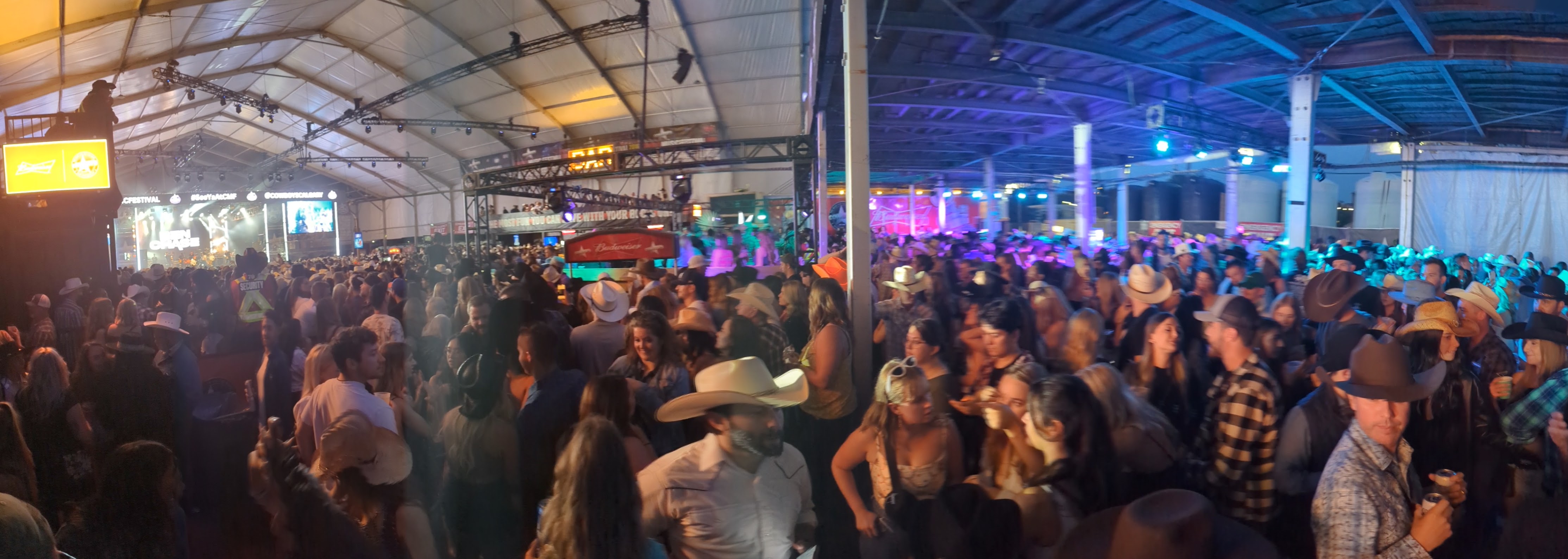
  • Cowboys is big, loud, throwback chaos in the best way. They are celebrating 30 years. I was a regular and a bartender for many of those.
  • Nashville North is the country heartbeat and where I will inevitably end up two-stepping with strangers who feel like old friends by last call. 
  • Wildhorse is the dance-floor-and-higher end food institution.Most 30+ year olds will congregate here because there is actually seating!
  • Ranchmans as we know it will be no more. This will be our last hoorah at this location. Cue “This Bar” by Morgan Wallen.

And there is always a buzzy new tent or two worth poking your head into.

Here is roughly how my friends and I run the week, because a plan is the only thing standing between you and a 10-day blur:

First Friday is Wildhorse. Always. This is the one my girls and I do every single year, no debate, no rescheduling. If you only build one tradition into your Stampede, make it a standing Friday-night plan with your people.

First Saturday is Cowboys. This is the night you let it be a little chaotic. Big crowd, big throwbacks, no expectations except a good story by the end of it.

Sunday is Nashville North for Russell Dickerson. My country tent night, and the whole reason I will be there early enough to skip the line drama (get there earlier than feels reasonable, I cannot stress this enough).

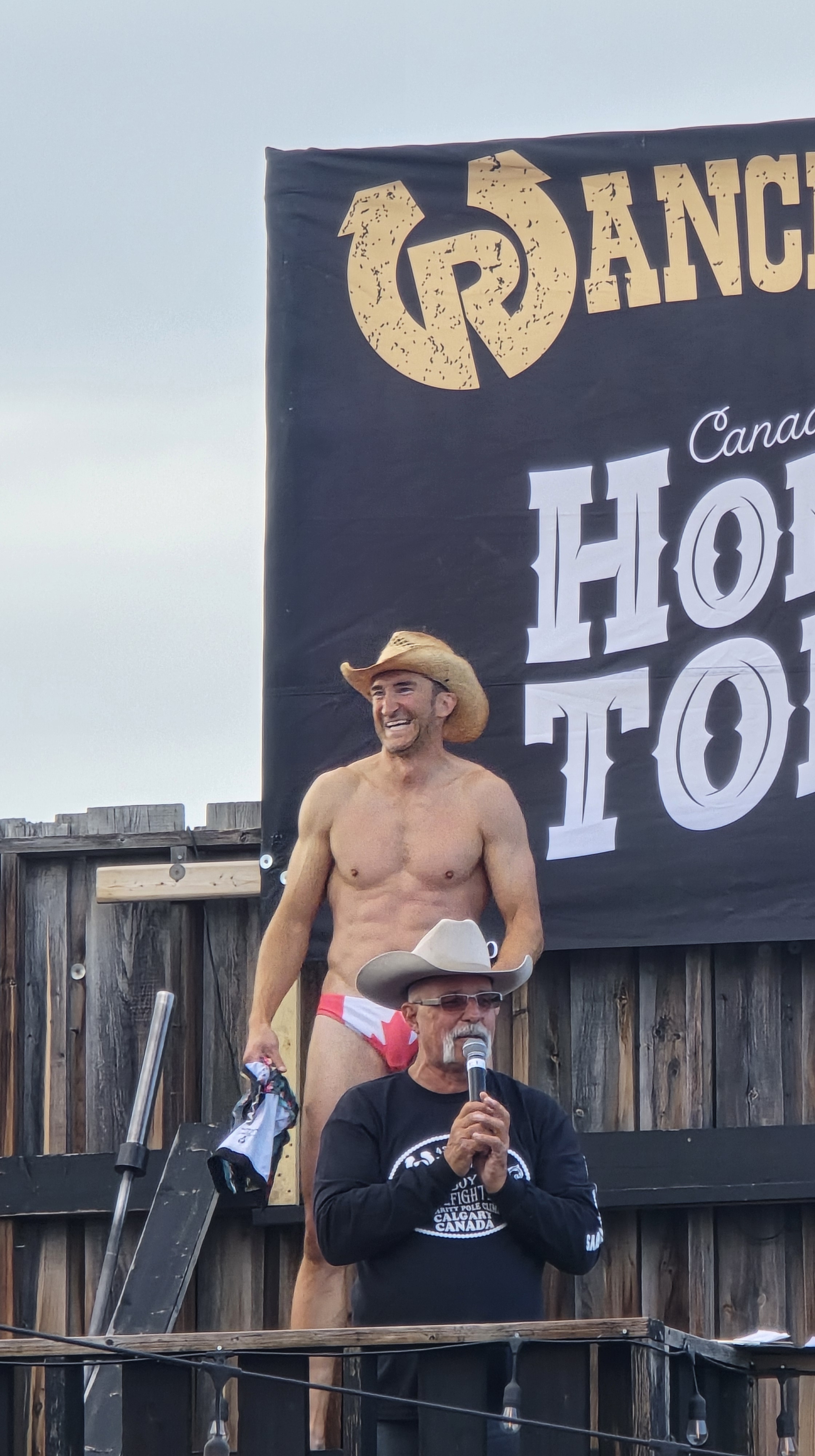
Monday is the Ranchman’s pole climb. (a Vanessa favourite)

Okay. My personal favourite event, and a perfect storm of three of my favourite things: firemen, country music, and drinks.

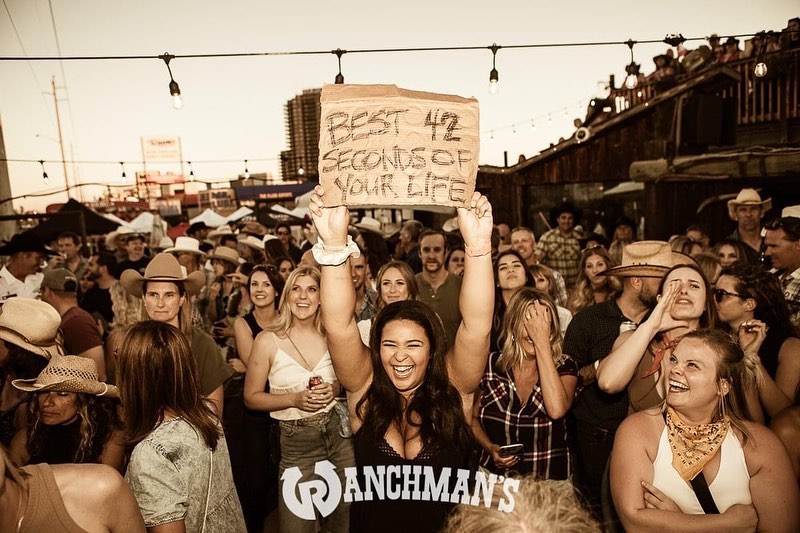
Every year the Calgary firefighters race rodeo cowboys to the top of a metal pole for charity, benefiting the burn unit. You can bid on the climbers in advance, the crowd skews delightfully female, it is all for a great cause, and the eye candy is, frankly, for everyone. It is a TENT POLE EVENT and I will not be taking questions.

Fun Fact: One year one of my best friends was a climber, so I made him a sign. Then another buddy entered at the last minute and I had to make a second sign. And then it kinda became my thing. The things we do for our people.

Then the back half of the week opens up, and honestly that is when the best spontaneous nights happen. I will be at Cowboys a LOT during week two, because the second-week lineup is stacked. Two I am genuinely counting down to: Ella Langley on July 10, which will be my third time seeing her and somehow I am more excited than the first two, and Jon Pardi on July 11. Jon Pardi? At Stampede? Are you kidding me. He is the best and I will hear no arguments.

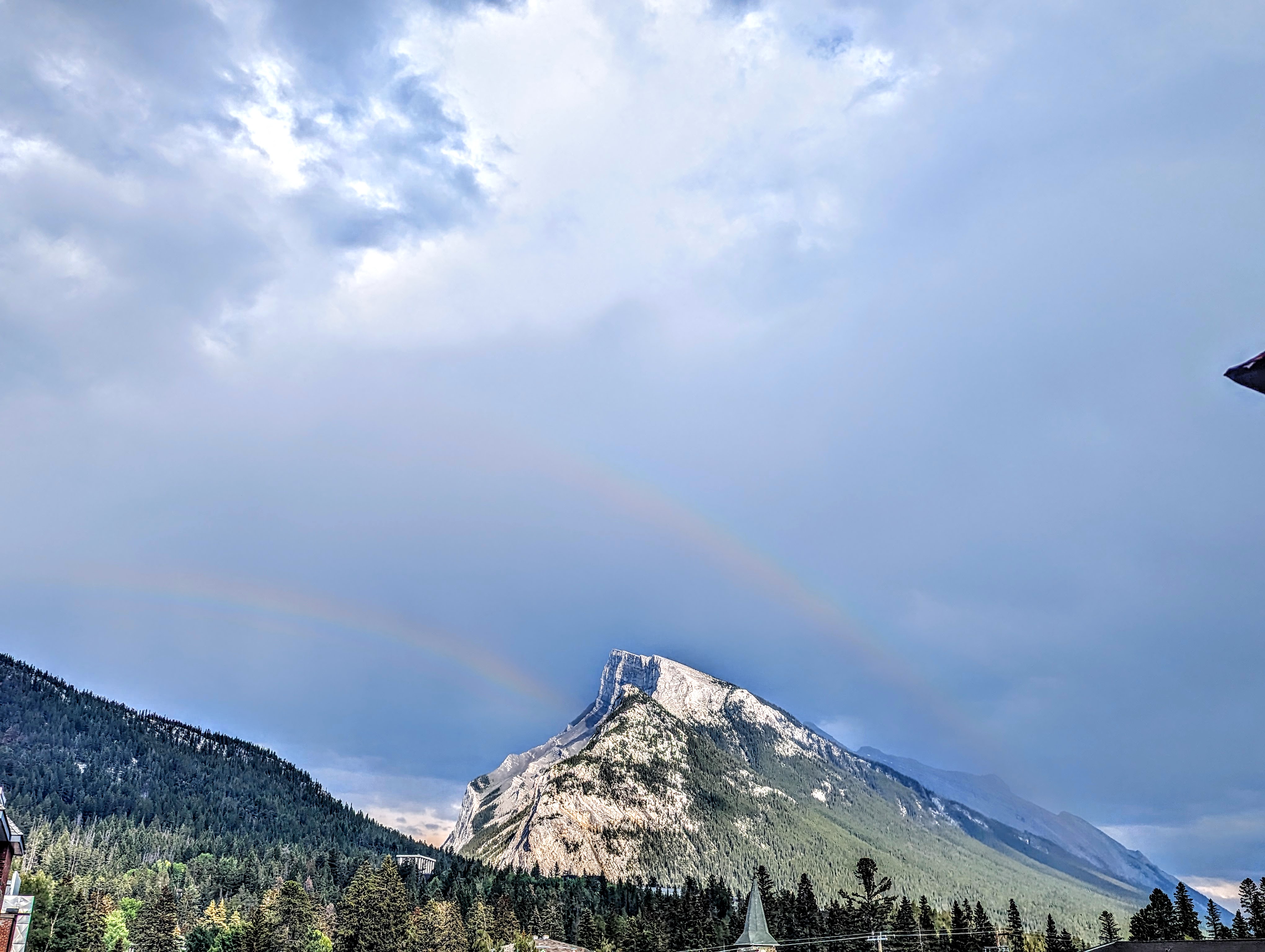
One more grown-up move: somewhere in the middle of all of it, I always sneak away to the mountains for a day. Banff, Canmore, a hike, a lake, a long quiet breath of mountain air. Stampede is a marathon of noise and people and caesars, and a single day of detox in the Rockies is the thing that lets me come back and do the second half properly. Consider it part of the itinerary, not a break from it.

The rodeo, the chucks, and the grandstand

Every afternoon at 1:30, the best rodeo athletes in North America compete for real prize money across the classic events, all building toward Championship Sunday. If you have never seen a live rodeo, it is genuinely thrilling, and the stadium energy is unmatched.

Then the Evening Show at 7:15 is the real spectacle: the Rangeland Derby Chuckwagon Races (this one is for my gamblers, pick a wagon and put a couple dollars on it), the ENMAX Relay Races, and then the Grandstand Show, which in 2026 features Alberta’s own High Valley alongside the Young Canadians. It closes with fireworks every single night.

Hot Tip for the tent crowd: the nightly fireworks are a great way to gauge what time it is when you have fully lost track inside Nashville North.

On animal care, because people always ask: I have toured the barns, I have had friends compete, and from everything I have personally seen, the animals are cared for with real love and attention. And if you want the wholesome version, the petting farm has horses, goats, cows, pigs, and sometimes actual fresh babies.

How to actually do Stampede as an adult

Here is the thing nobody tells you. Stampede hits completely differently when you are grown. As a kid it is mini donuts and the midway. As an adult, the move is to stop trying to do everything and instead build each day around ONE thing you genuinely care about. That is the whole secret, and it is exactly how I mapped out my week above: anchor the nights that matter, leave room to be spontaneous, and protect one quiet day in the mountains.

I actually built myself a little day-by-day calendar this year so I would stop overcommitting, and it has already saved me from three scheduling disasters in my own head.

The adult Hot Tips, all in one place:

  • Wear the boots that are actually broken in. Cute new boots are a trap and a blister factory.
  • Hydrate between the tequila and beer. You are not 22. Electrolytes are your BEST FRIEND.
  • Day Drinking > Night Drinking.
  • Eat a real breakfast (see: free pancakes) before a long day on the grounds. Mimosa’s are allowed.
  • Pace the day. Afternoon rodeo, dinner break, then your evening tent. You cannot sprint a 10-day marathon. (Believe me – I have tried)
  • Pick your priority, build the rest of the night around it, and let the FOMO go.
  • Finally, thundershowers WILL happen – that’s why I always pack a mini umbrella or a poncho in my purse.

On top of all of it, Stampede is just a great excuse for backyard barbecues with the people you love and a few slow drinks under a big Alberta sky. So if you have been waiting for a sign to finally come experience the Greatest Outdoor Show on Earth, this is it.

See you in the chaos. Yahoo.

Reinventing Yourself: Why Pressing Pause Might Be the Best Way to Hit Play Again

If you’ve ever felt like you were living life on a treadmill, cranked up to a speed that’s just a little too fast girl, you are not alone. For years, I thought the answer to feeling stuck was to sprint faster, work harder, and answer emails at lightning speed. Spoiler alert: it wasn’t. But as someone who once took a solid four-year break from the dating world to heal, re-center, and rediscover my own groove, I’ve learned that sometimes, the best way to move forward is to hit pause. Because, as it turns out, reinvention isn’t always about dramatic changes it’s often found in those small, daily habits that give us space to breathe, reflect, and actually enjoy this chaotic ride called life.

So, whether you’re navigating a layoff, grief, the end of a relationship, or just trying to figure out how to thrive in a city like Toronto (where a condo costs more than your childhood home), here’s what I’ve discovered about the art of self-reinvention and why pressing pause might just be the best way to press play again.


The Power of the Pause: Why I Stopped Running on Empty

There’s a reason why most self-help books tell you to “take time for yourself” is because it works. I used to think that slowing down meant falling behind, that if I wasn’t constantly moving, I’d miss out. But after losing my brother, I realized I needed to hit pause…not just on love, but on the constant race to “keep up.” And it’s in that pause that I found space to actually listen to myself.

Taking time away from dating and focusing on healing wasn’t easy, but it was necessary. I poured my energy into my work, sure, but I also learned how to pour into myself. And while it might sound cliché, there’s nothing like waking up on a Saturday morning and realizing you don’t have to rush out the door for brunch plans you didn’t even want to make. Turns out, sometimes self-care is about giving yourself permission to just be.

The Secret to Working for Myself Before Working for Anyone Else

Here’s a little truth bomb I wish I’d known years ago: before I could work for someone else, I had to learn how to work for myself. And no, I don’t mean quitting my job and becoming a full-time influencer (though hey, if you’re into that, more power to you). I mean creating a routine that made me the priority, even if it was just for an hour or two each morning.

Before I head into the office (or, you know, shuffle from my bedroom to the home office in my favorite sweater dress), I make time for what matters to me. For me, that means starting my day with movement whether it’s a Peloton ride, yoga, or a quick strength session to remind myself that my body can do hard things. After that, I tend to my 20ish plants (and yes, they each have a name and a specific watering schedule). There’s just something grounding about seeing those little green guys thrive, even when I can’t keep track of my own laundry schedule.

And then there’s my morning ritual: a big cup of bone broth, my favorite music playing in the background, and a few deep breaths before I even think about checking my teams or slack. I promise you, the emails can wait. This little slice of “me time” has become my non-negotiable. It’s like putting on your own oxygen mask before helping someone else, except the oxygen mask is actually a steaming cup of collagen-rich goodness that makes you feel like you can tackle the world or at least the latest Zoom meeting.

Little Acts of Self-Reinvention: The Not-So-Dramatic Truth

When people think about reinvention, they often picture a movie montage: quitting a toxic job, cutting off all your hair, and moving to Bali (okay, maybe that last one’s just me). But the truth is, most reinventions happen in the small moments; like deciding to walk to work instead of cramming into a packed subway car or learning how to make a bomb iced mocha at home instead of spending $7 every day at the trendy café down the street.

For me, it was about letting go of the idea that I had to be a certain version of “put together” to be worthy whether that meant in the eyes of a partner, my boss, or even my friends. I stopped trying to be everything to everyone, and I started focusing on what actually made me feel alive. Some days, that’s a killer presentation at work; other days, it’s eating sushi on my couch while binge-watching reality TV. Balance, right?

Creating Space for the Unexpected (Even When Life Forces the Pause)

Funny thing happens when life doesn’t go as planned – you end up discovering parts of yourself you hadn’t met yet. When I was laid off after Thanksgiving, it felt like everything I’d been building suddenly vanished overnight. But instead of rushing to fill the space with noise, I let it be quiet for a while.

And in that stillness, I started to breathe again. I reconnected with the things that make me me – watching my favourite sports teams play without guilt, writing just for the joy of it, making silly, creative content that reminded me not everything has to be so serious. I found excitement in small things again: nailing a new recipe, hitting a PR on the bike, spending a Monday doing absolutely nothing.

It wasn’t the kind of “unexpected” I’d have chosen, but it’s exactly what I needed. Because when everything familiar falls away, you’re left with a blank canvas and sometimes, that’s where the most authentic version of you begins to take shape.

Tangible Tips for Pressing Pause (Without Feeling Guilty)

Look, I get it—if you’re anything like me, the idea of slowing down can feel counterintuitive. But here are a few little ways to start:

  • Start Your Day, Your Way: Even 10 minutes of stretching, journaling, or sipping your coffee or bobe broth in peace can set the tone for the day. Think of it as “me time” insurance.
  • Unplug from the Hustle: It’s okay to let some texts sit unread or to watch a sunset without taking a picture. Trust me, Instagram will survive.
  • Prioritize Joy: Remember when hobbies were just for fun, not side hustles? Bring that back! Whether it’s painting, reading, or making a slow and extravagant meal, find time for things that make you smile.
  • Trust your gut: I’ve been drawn to a few serendipitous events and people over the past few weeks. For example, last week, I entered to participate in this incredible concept of having dinner with 8 strangers hosted by an incredible artist that I have admired for years, and I sat with all of these incredible women and we talked about life and love and our passions and I left feeling genuinely excited for what the universe has in store for me next.

At the end of the day reinventing yourself doesn’t always mean starting over it can just mean slowing down enough to appreciate where you are right now. For me, it was once about learning that I could be my own best company before inviting anyone else into my world. Today, it’s about rest and finding my purpose and passion in life again. It’s about knowing that your journey isn’t defined by how fast you get there, but by how fully you live along the way.

So, to all my fellow thirty-somethings navigating downtown life, busy careers, layoffs, and that elusive work-life balance: remember that it’s okay to hit pause.

Who knows? You might just find that the things you’ve been chasing have a way of finding you when you least expect it. And if not, well, there’s always another plant to adopt.


What little daily rituals have helped you find your own version of “pause”? Drop a comment below, because we could all use some new self-care inspo!

The Boys of Summer, the Power of Friendship, and Why the Blue Jays Won Anyway

A love letter to baseball, friendship, and finding joy again

There’s something about baseball that feels a little bit like falling in love. The slow build, the anticipation, the heartbreak, the hope that maybe this season will be the one. For me, this Blue Jays season was all of that and more: a rollercoaster of emotion, connection, and the kind of unexpected joy that shows up when life throws you off course.

Baseball, Heartthrobs, and Healing

Let’s start with the obvious: the Jays might not have made it all the way to win the World Series (Game 7, extra innings made it pretty darn close though!), but my heart still did a few laps around the bases thanks to George Springer and Ernie Clement. Tell me Ernie doesn’t look like a 90s heartthrob straight out of a baseball movie. Watching those guys play wasn’t just about stats or standings; it was about energy, teamwork, and that chemistry that makes you believe in something bigger than the game.

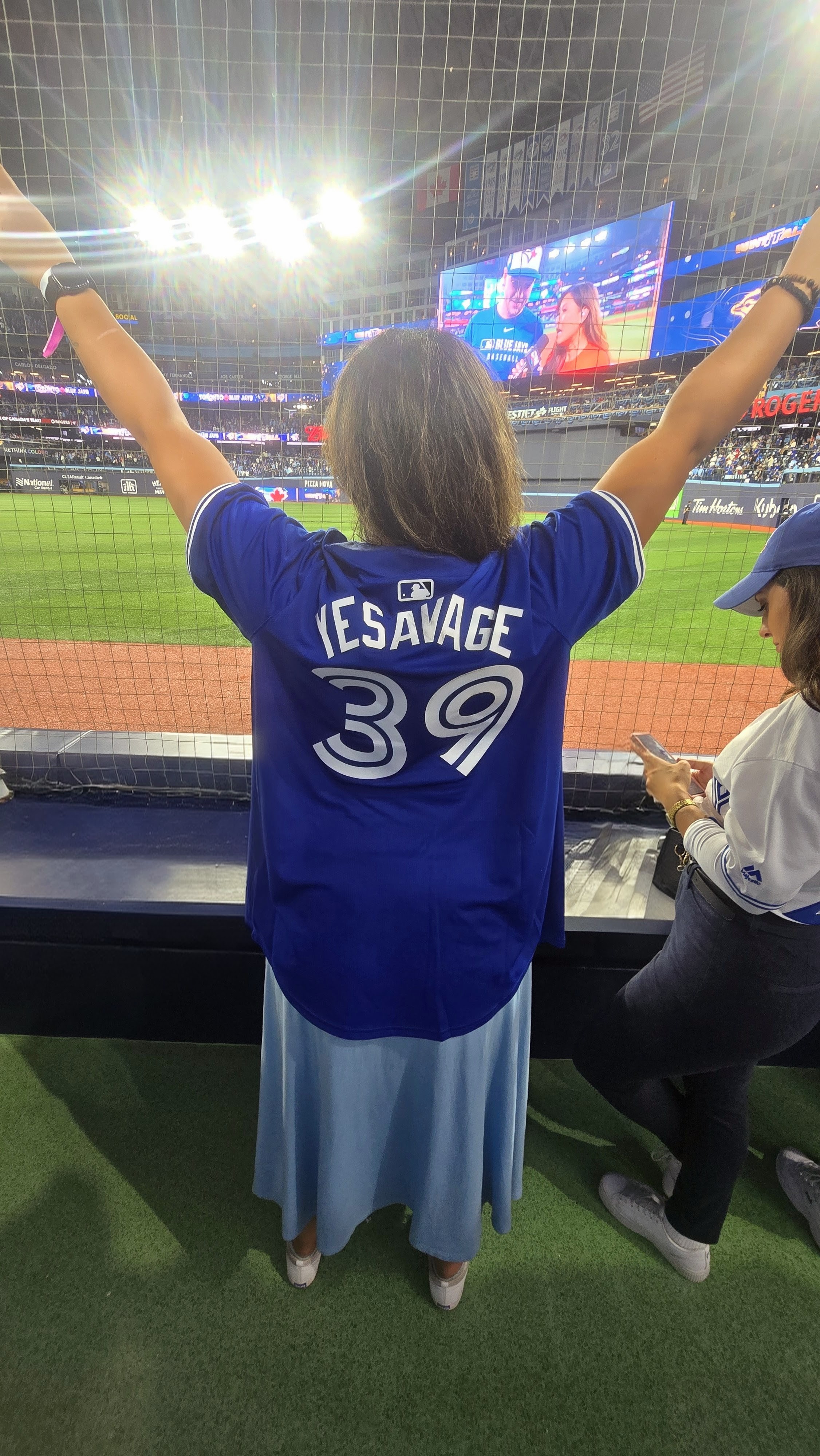
And yes, I’ll admit it. I bought the jersey (and finally retired my Bautista jersey). Trey Yesavage, the new kid on the block, had that spark. The kind of confidence and presence that makes you want to root for him like he’s your little brother and your celebrity crush at the same time. There’s something magnetic about a player who’s just getting started and already feels like part of the team’s story. Plus, it helps that he set a new postseason MLB record when he pitched 12 strike outs (Insane!).

Sports Are My Reality TV

Here’s the thing: for most men, watching sports is their comfort zone. It’s their ritual, their therapy, their way to turn off the noise of the world for a few hours. For some women, it’s reality TV. This is one of the few times that this girly dress-wearing gal will agree with the guys – there is just something about sports that draws me in better than any reality TV show.

The dedication, the drama, the investment—it’s all the same. We watch storylines unfold, we root for our favorites, we scream at the screen when someone we love gets traded or misses an easy play. The only difference is that my version of “who gets the rose” is “who hits the walk-off.”

Baseball, like reality TV, has that mix of chaos and connection that makes you feel like you’re part of something. It’s communal, it’s emotional, and when you really love your team, it’s personal.

When Baseball Becomes Therapy

This season hit differently. Maybe because I was rebuilding too. When I got laid off, I suddenly had time to breathe, to reflect, and to really watch. I made a decision early on that if I was going to have a season of pause, I might as well fill it with something I love.

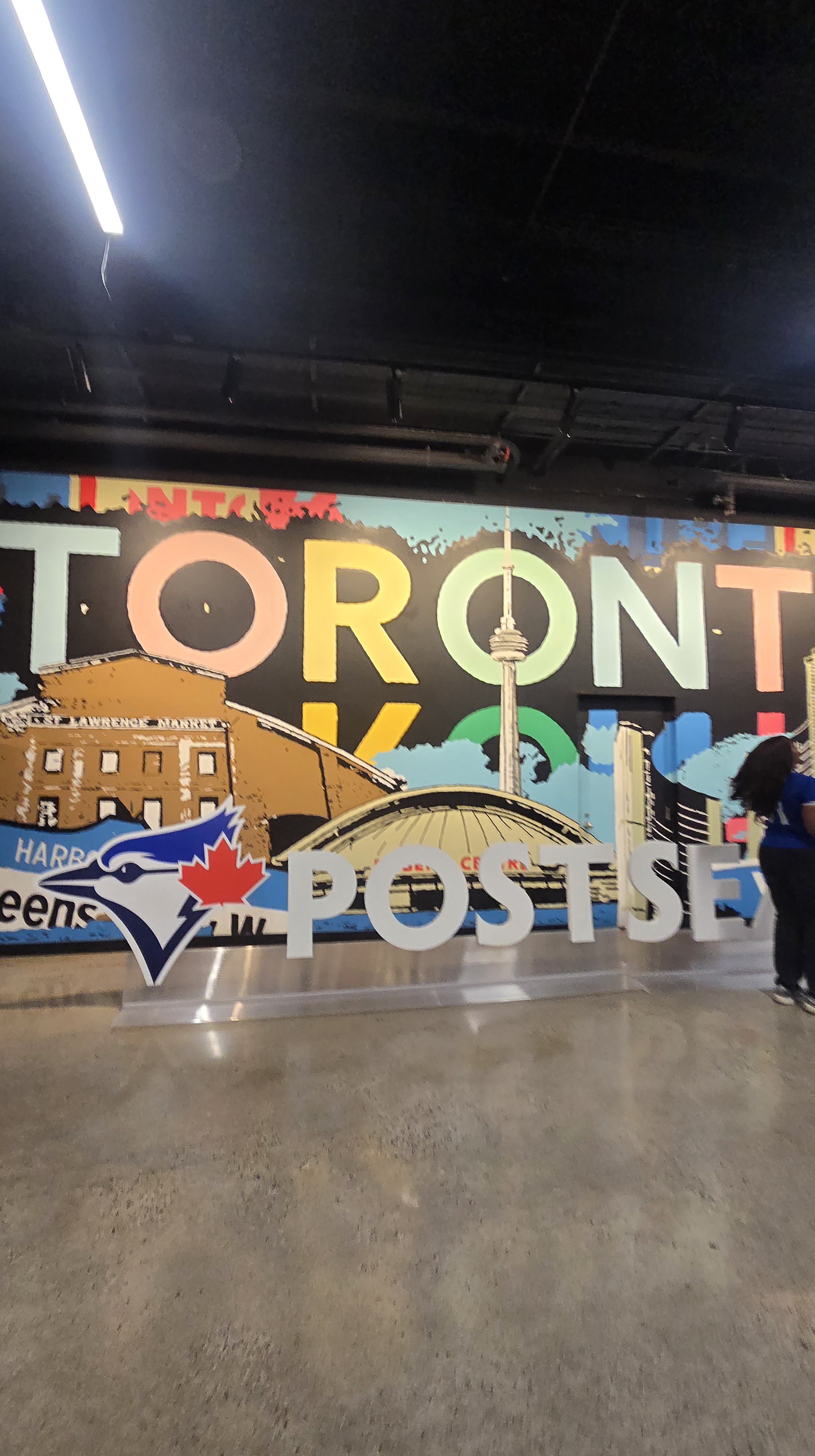
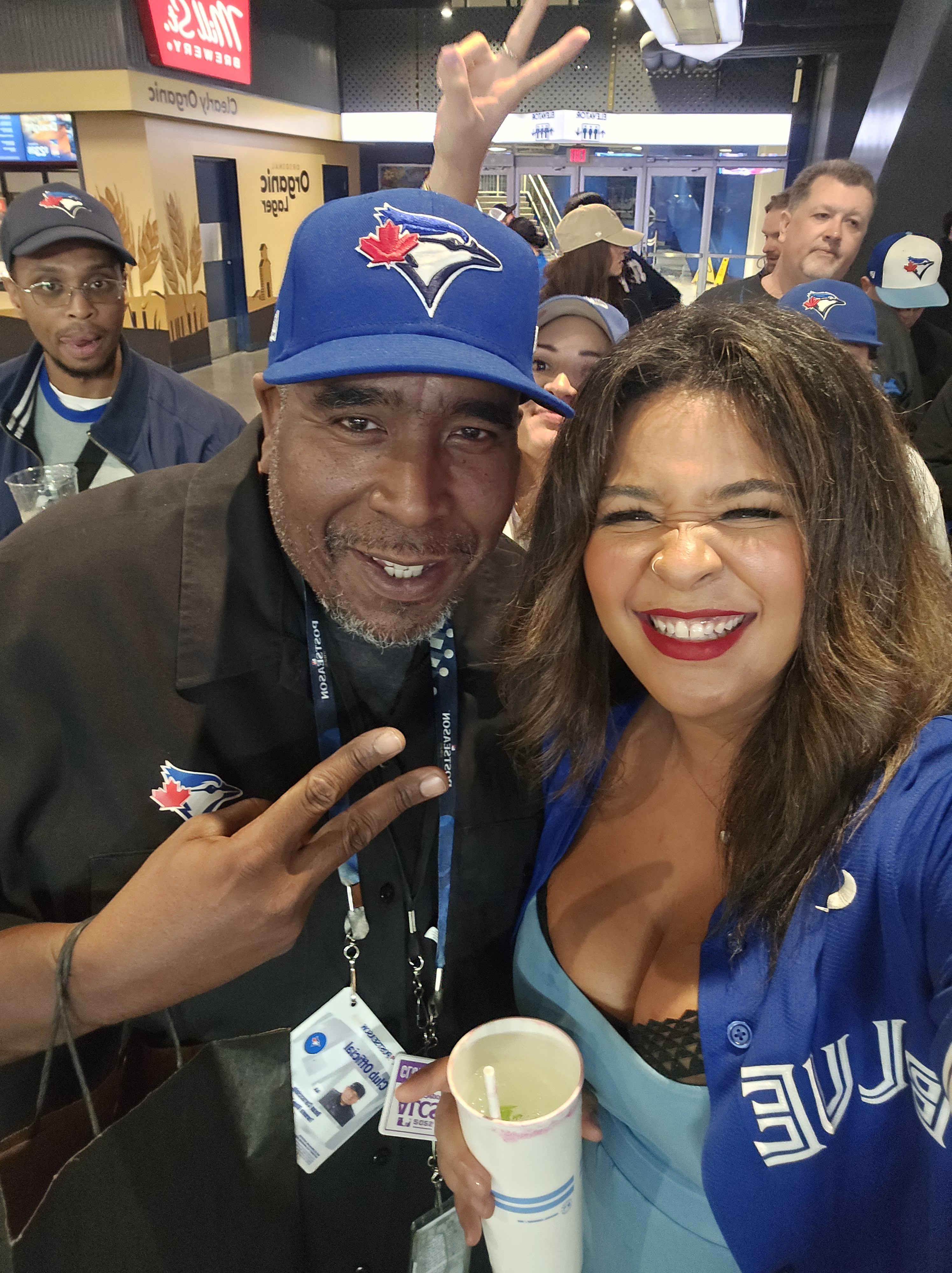
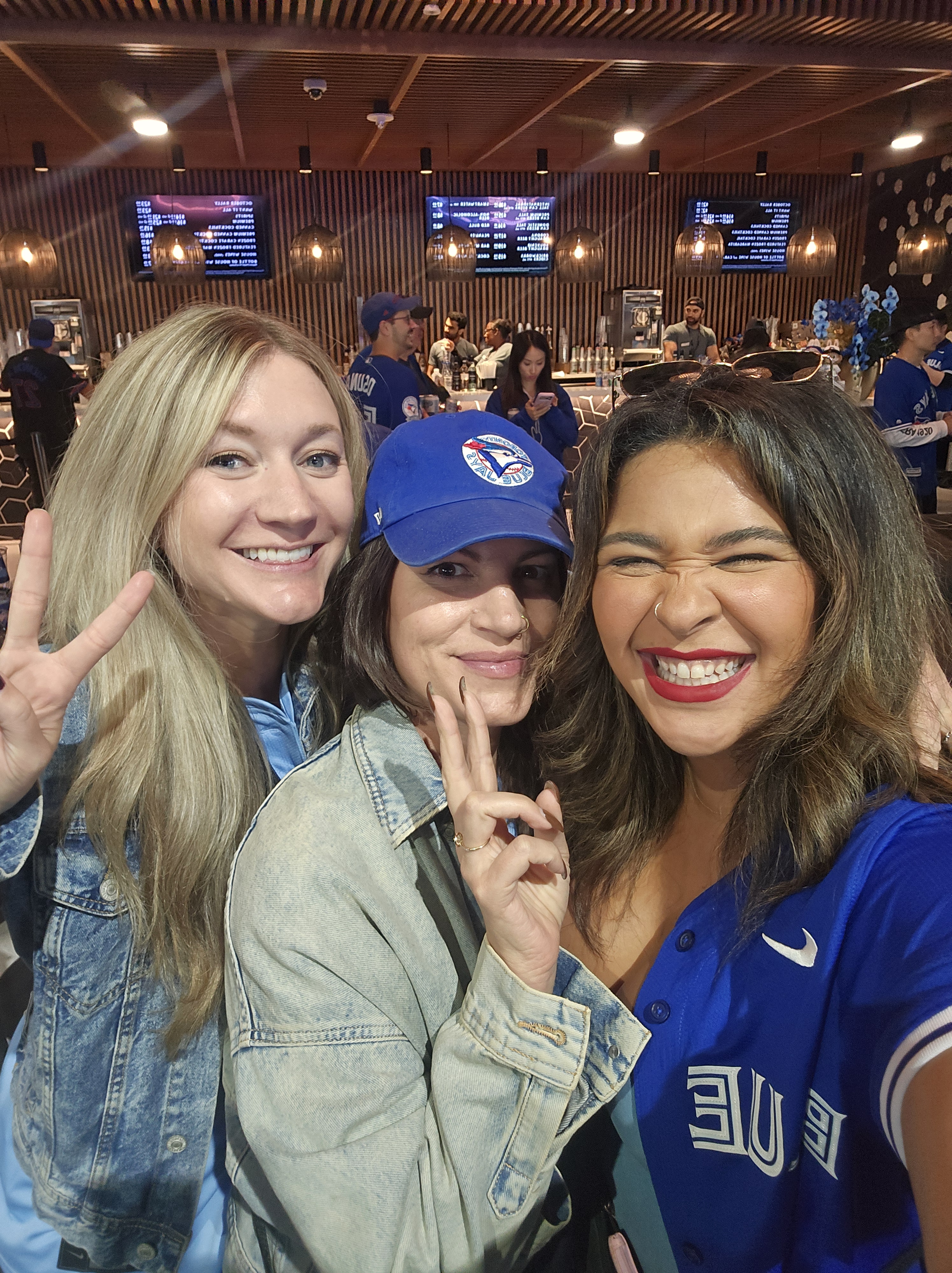
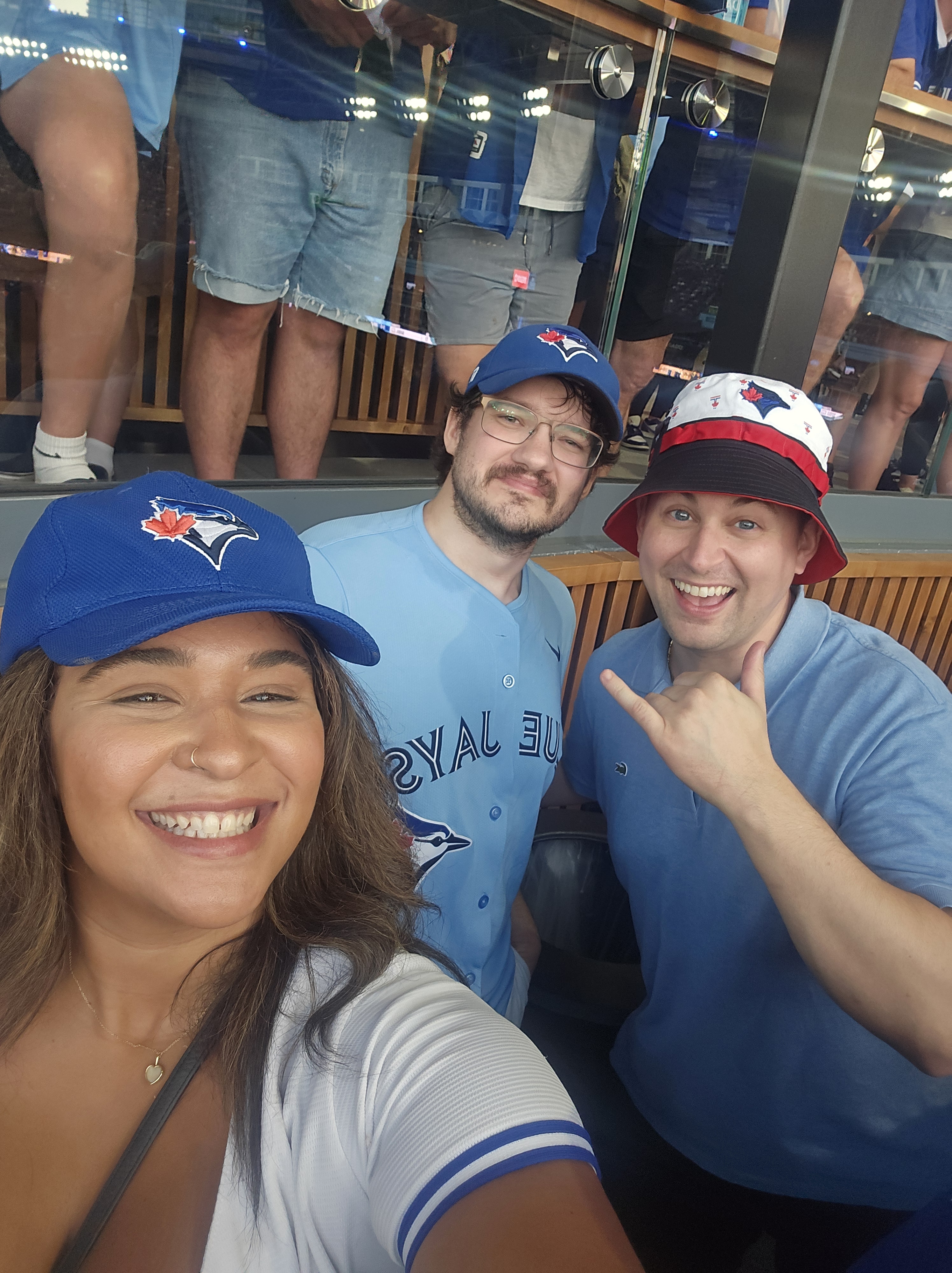
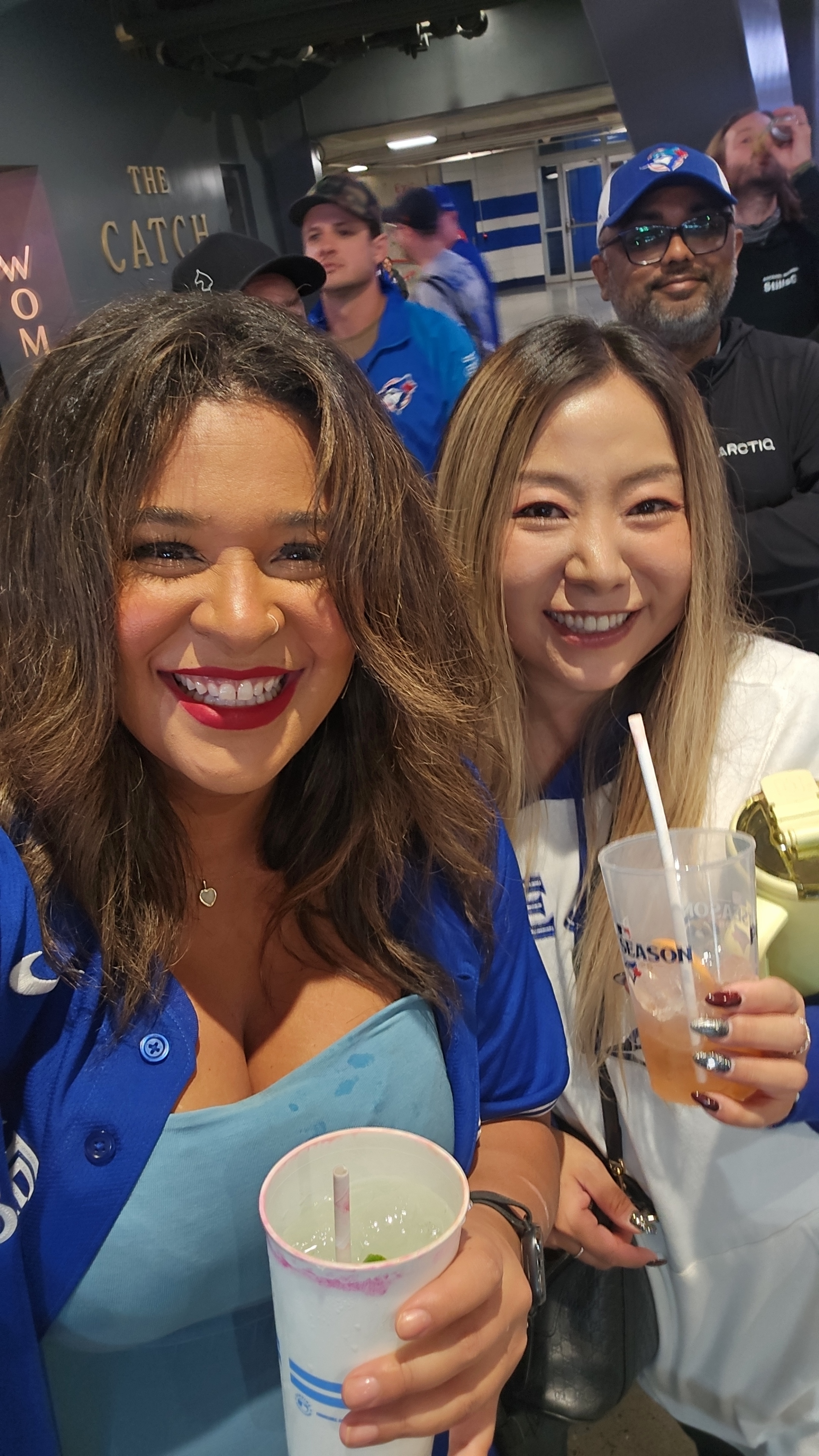
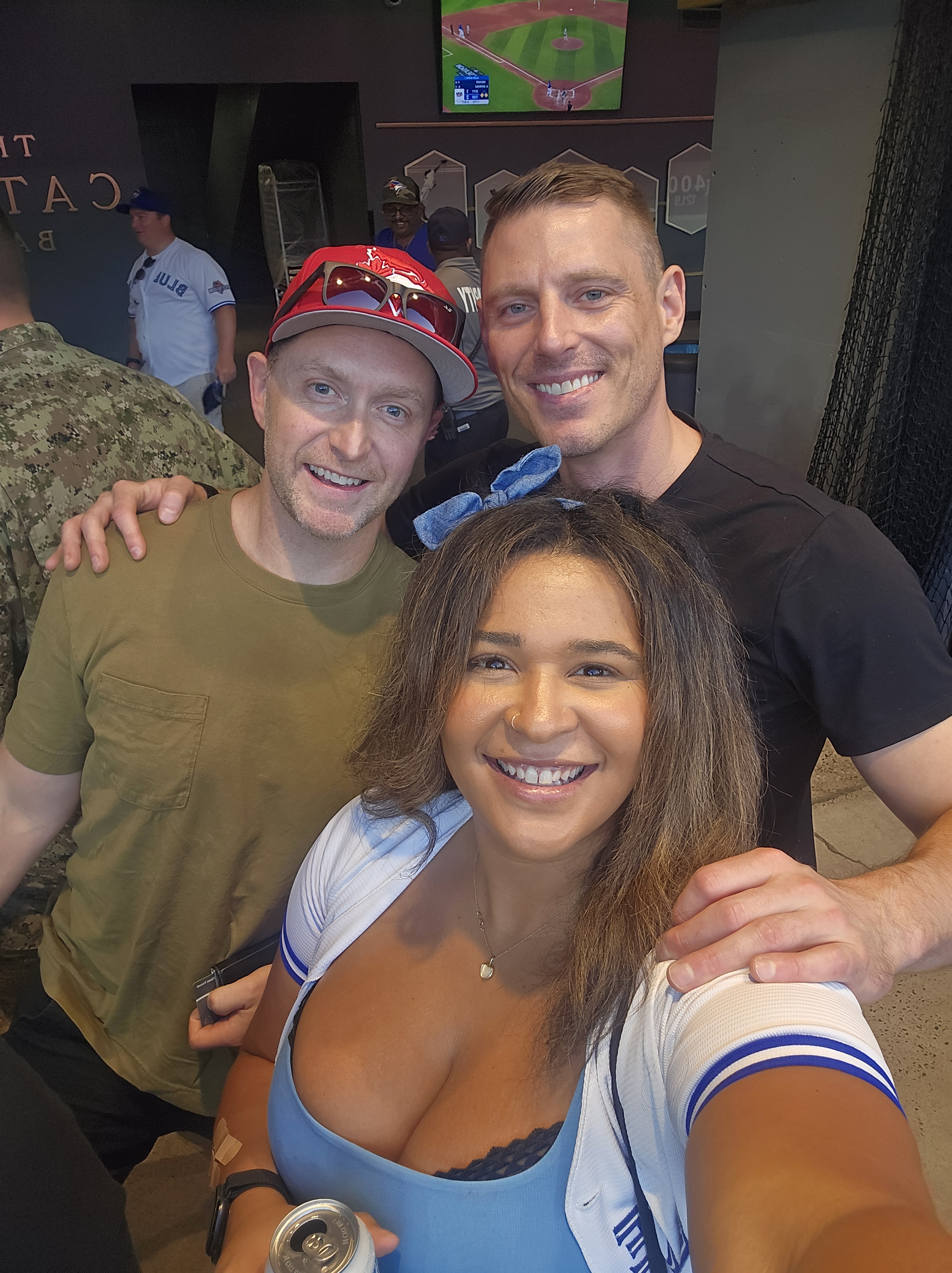
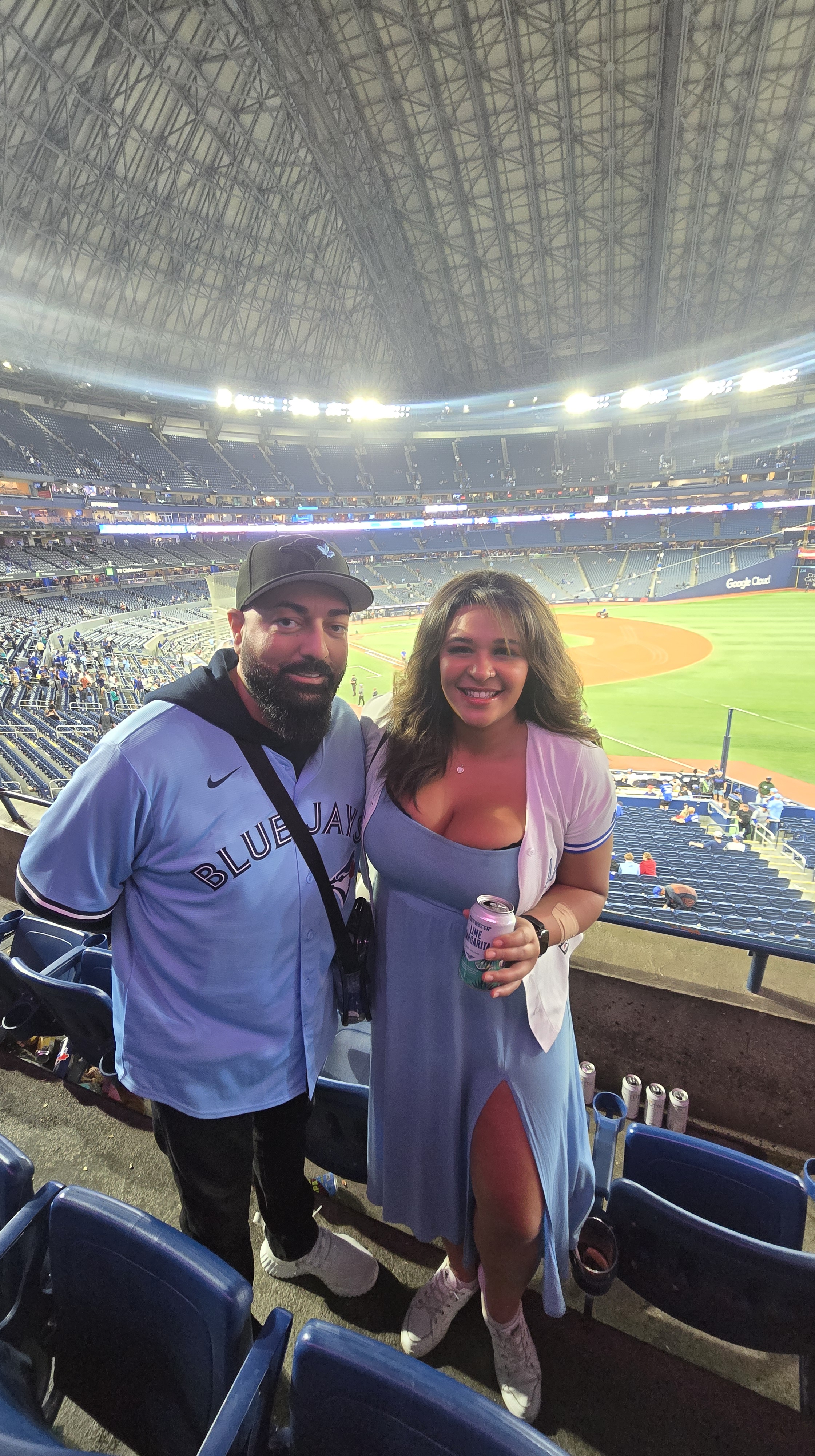
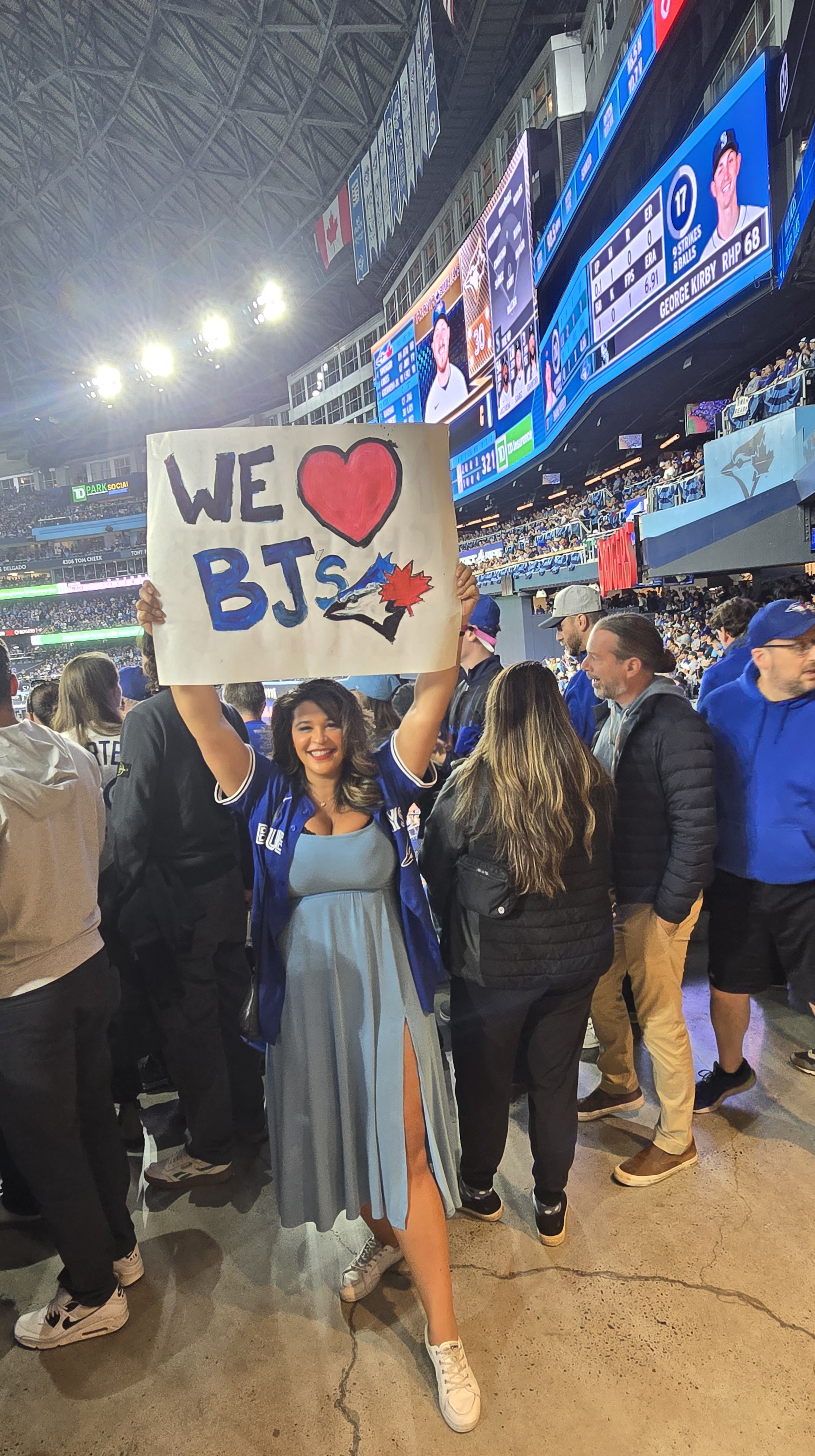
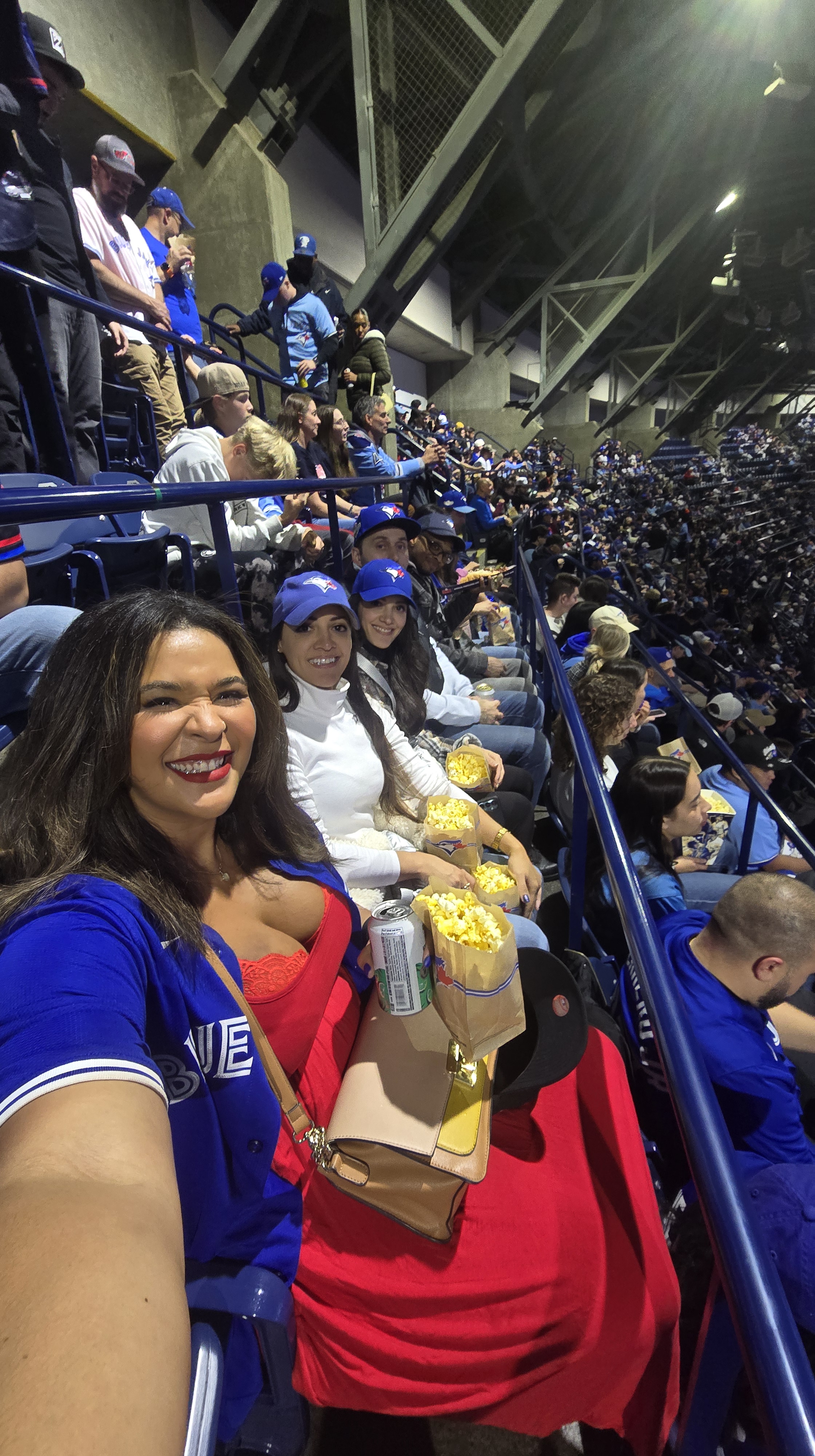
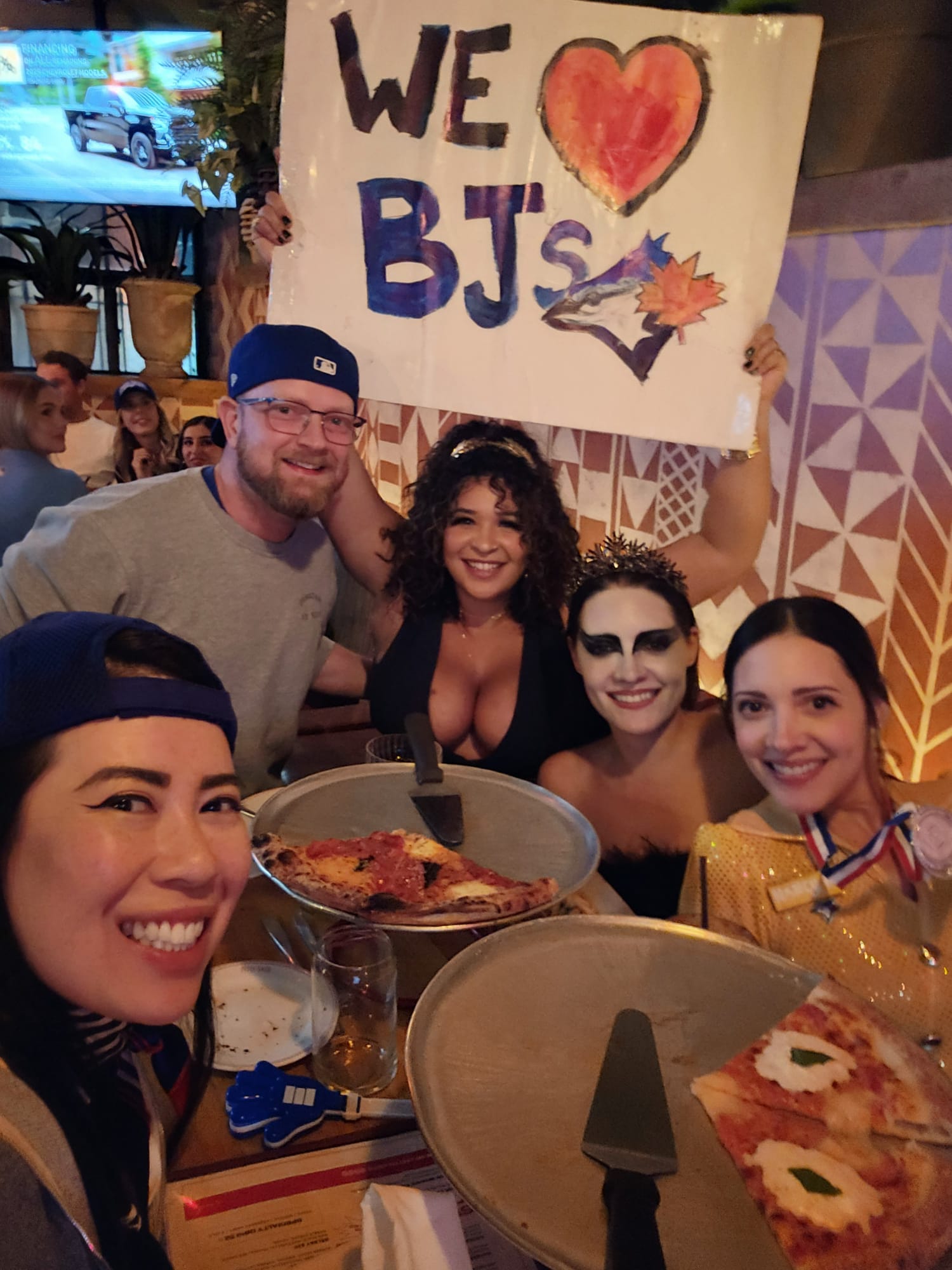
So I went to every home game of the ALDS and ALCS. I cheered until my voice was gone, met strangers who became instant friends, and found myself laughing more than I had in months. There was a shared language in the stands: chirps, tequila shots, and collective heartbreaks that somehow brought everyone closer.

Somewhere between those games, I realized that baseball had quietly become my therapy. It wasn’t about distraction anymore; it was about belonging. About feeling part of something electric and alive.

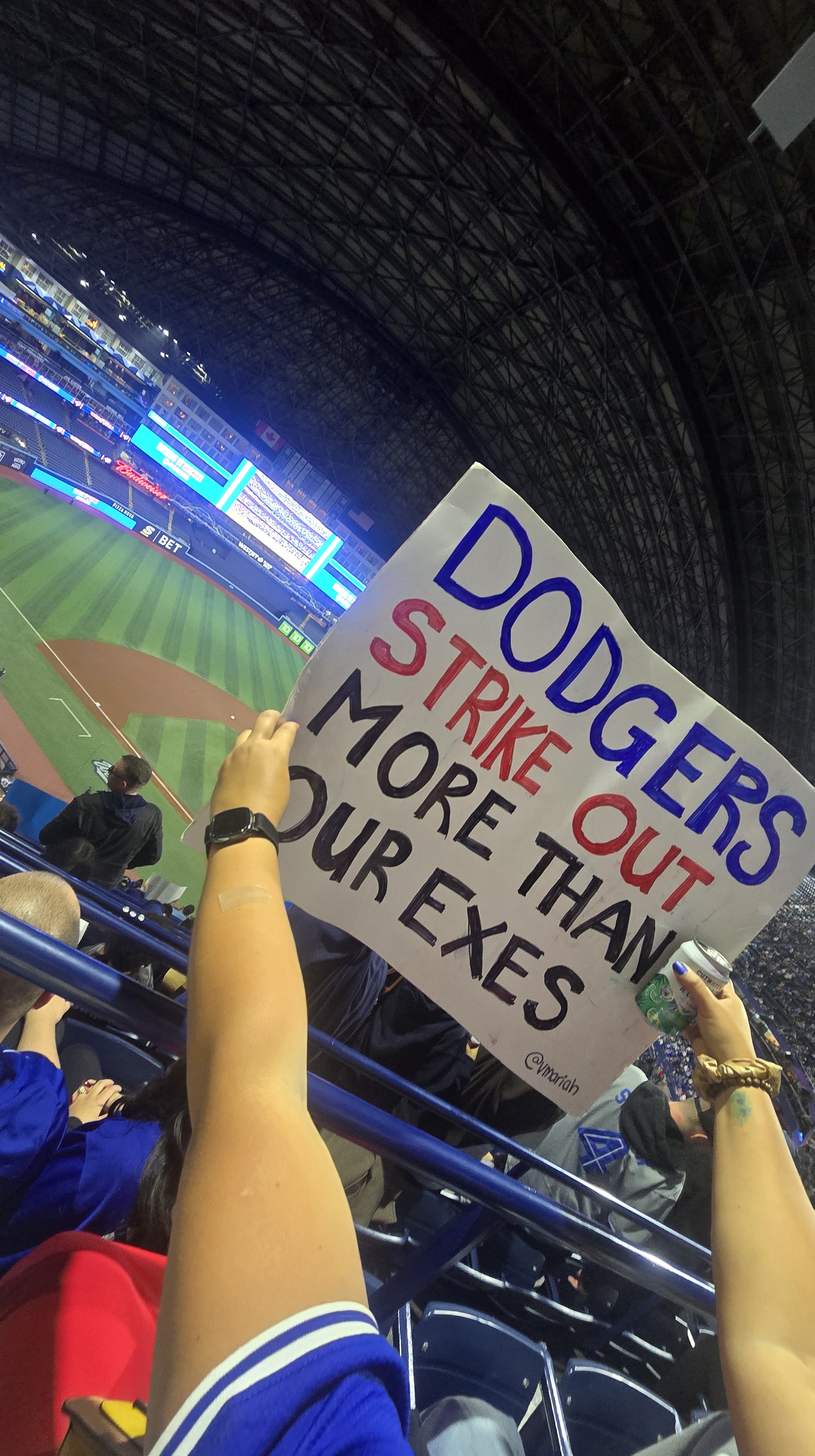
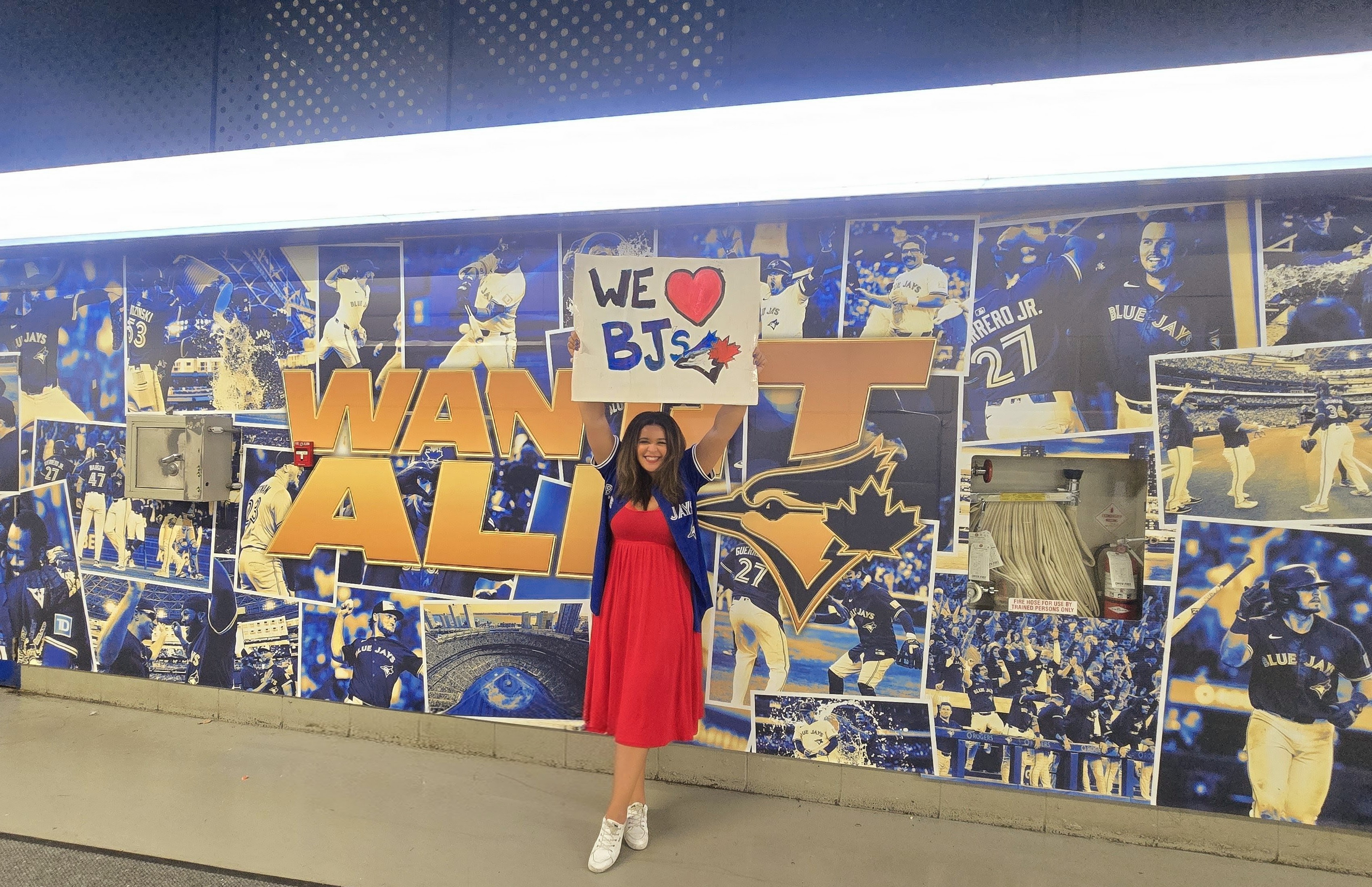
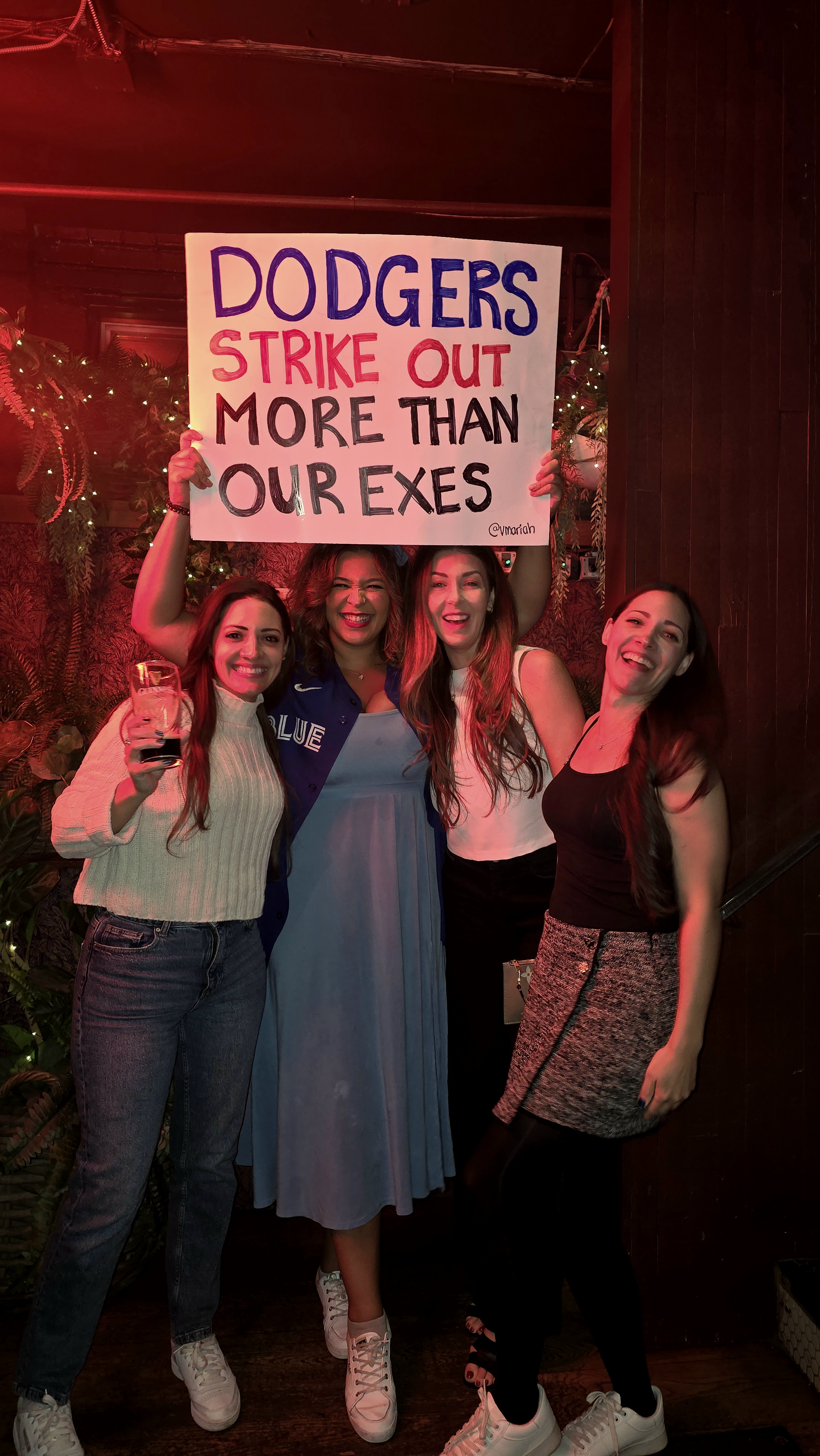
And let’s be honest, being on Breakfast Television to cheer them on live was a moment I’ll never forget. Having my signs go a little viral on social media was pretty fun too! Maybe it wasn’t the World Series trophy, but it sure felt like a win.

Why the Jays Still Won

They might not have brought home the championship, but what they gave us was something better: a reminder of why we care. They reminded us that showing up matters. That connection can happen anywhere, even in the bleachers surrounded by strangers who feel like family by the ninth inning.

The Blue Jays didn’t just play baseball this year. They reminded us what it means to feel hopeful again. And when life feels uncertain, hope is everything.

So no, they didn’t win the World Series (No, I am still not iver the “wedge” ball). But they won our hearts.

And I’ll be right there next season, jersey on, tequila in hand, ready to believe all over again.

Between Calgary and Toronto: A Love Letter to My Two Homes (and All the People I’ve Collected Along the Way)

Growing up, I thought I’d find my forever home by the time I hit my mid-twenties. But here I am, 34, and if my life were a travel map, it’d look like a game of hopscotch. I spent my first 26 years in Calgary (minus that year-long detour in Turkey and a semester in Spain where I mostly ate my way through every tapas bar I could find), and now I’ve clocked seven years in Toronto. But honestly? I still haven’t found that elusive “forever” home.

Yet, what I have found is a deep love for both cities and an appreciation for the incredible humans I’ve met along the way—whether they were the kind to shovel snow off my car in Calgary or the kind to share a knowing nod when the Toronto subway is yet again delayed. So, let’s take a little stroll through my two homes, filled with all the quirks, love, and maybe a bit of homesickness, too.


Calgary: The Original Love Story Ah, Calgary. My first true love. Picture this: the majestic Rockies, a Stampede that’s 10% rodeo and 90% deep-fried everything, and winters that test your will to live. This city raised me, taught me how to survive a -30°C day (hint: it involves layers and sheer stubbornness), and gave me my first taste of freedom, driving down Deerfoot with the mountains in my rearview mirror.

But Calgary isn’t just about cowboy boots and chinooks (those warm winter winds that feel like a miracle). It’s the kind of place where you can leave your car running to warm up in winter and not worry that it’ll disappear. It’s where people smile at you on the street (even if you’re bundled up like a walking sleeping bag). It’s where I built friendships that go back decades and where people still ask, “You’re really living in Toronto now?” like I’ve joined the dark side.

Sure, sometimes I miss the mountain views and being able to see for miles without a skyscraper in sight. But there’s a certain charm in Calgary’s earnestness, the way everyone shows up for each other—even if it’s just to help push your car out of a snowbank.


That Year in Turkey and a Semester of Tapas: The Side Quests Before we get to my Toronto era, let’s take a quick detour. There was that year in Turkey where I learned how to bargain at the markets and ate baklava like it was a full-time job. And let’s not forget that semester in Spain, which was basically me “studying” Spanish culture through churros and tortilla Española. These side quests taught me that the best way to make friends is to share food—and that sometimes, you need to get a little lost to find yourself.

These adventures gave me a taste of life beyond Alberta, and while I didn’t come back with a forever home, I did return with a sense of wanderlust and the realization that the world is a lot bigger than my childhood cul-de-sac.


Toronto: The City That Stole My Heart (And My Rent Budget) And then, there’s Toronto. If Calgary is my hometown sweetheart, Toronto is the unpredictable fling that turned into something deeper. Sure, it’s got its flaws—like housing prices that make me question my life choices, and the traffic that has me considering a second career as a subway announcer (because, honestly, I think I could do a better job). But for every TTC delay, there’s a new restaurant to discover, a hidden park to explore, or a random street festival that I stumble upon on my way to grab groceries.

Toronto is where I learned how to parallel park without having a mild panic attack. It’s where I discovered that it’s totally normal to pay $7 for a latte, as long as it comes with oat milk and a sprinkle of artisanal foam. And it’s where I’ve met people from every corner of the world, each with their own stories and quirks that make this city feel like a constant adventure.

Toronto has a rhythm to it—a little chaotic, a little intense, but with moments of pure magic. It’s walking through Kensington Market on a Sunday afternoon, discovering the best dim sum in Chinatown, or getting lost in the endless shelves of a secondhand bookstore in the Annex. It’s a city that’s constantly evolving, and somehow, it’s made space for me, too.


Collecting People, One City at a Time The real reason I can’t choose between Calgary and Toronto? It’s the people. In Calgary, my friends have become like family—people who knew me back when I still thought side bangs were a good idea. They’re the ones who show up at my parents’ house for Thanksgiving, even when I’m not in town, and who still text me memes that only make sense if you’ve lived through a prairie winter.

In Toronto, I’ve found a new kind of tribe—people who share my love for urban hikes (a.k.a. wandering through alleys for the best street art), who will happily spend an afternoon café-hopping with me, and who understand the struggle of finding affordable rent in the city’s labyrinth of overpriced condos. It’s a place where I’ve built new traditions, like grabbing sushi takeout and watching the sunset at the waterfront or discovering which of my friends can survive the heat of the latest hipster hot sauce.

And sure, sometimes it’s hard not knowing where I’ll eventually settle down. But there’s a certain beauty in feeling at home wherever you are—in knowing that no matter which city I land in, I’ve got people who’ll make me feel like I belong.


Home Isn’t Just a Place—It’s a Feeling So, maybe I haven’t found my forever home yet. But maybe that’s okay. Maybe home isn’t just about where you live, but about the people who fill those places with meaning—the friends who become your chosen family, the barista who remembers your complicated coffee order, the neighbors who wave as you navigate Toronto’s street parking like a pro.

It’s about finding a little piece of home in every city you visit, whether it’s in the mountain air of Calgary or the eclectic buzz of Toronto. It’s knowing that while I might not have picked a place to plant my roots for good, I’ve created a life that feels full, connected, and a little bit like a cross-country adventure.


Calgary, Toronto, or wherever life takes me next—each place has left its mark on my heart (and probably on my Instagram feed, too). And while I might not know where I’ll end up, I do know that I’m grateful for every friendship, every city skyline, and every moment that’s made me feel at home, even if just for a little while.

Are you a fellow city-hopper or have you found your forever home? Let me know your thoughts in the comments—I’d love to hear where you’ve planted your roots (or where you’re still wandering)!

Love, Career, and the Art of Multi-Tasking: How Finding a Job and Finding a Partner Are Weirdly Similar

If you’d told me a few years ago that navigating my career and my love life would end up looking eerily similar, I probably would have laughed. Or, let’s be real, I would have rolled my eyes so hard I’d be seeing my own brain. After all, I’d taken a solid four-year hiatus from dating to focus on myself and to heal. Losing my brother was a seismic shift in my life, and I needed time to figure out who I was again without all the emotional noise. But life has a way of throwing you curveballs, and while I was busy building my career in marketing, love decided to sneak up on me—from 3,000 miles away, no less.

So, I got to thinking: there’s a lot of overlap between managing a career and navigating a love life. Here’s what I’ve learned about the job hunt, the dating game, and why finding “the one” (whether it’s a job or a person) might just be a little bit of both.

The Job Interview = The First Date

Let’s start with the basics. The job interview and the first date: two scenarios that will make even the most confident among us question every life choice up to that point. You spend hours prepping, rehearsing your lines, hoping you don’t overshare or accidentally spill something on yourself. You’ve done your research on their company—or their profile (yes, I mean the LinkedIn stalk). And you just know you’ve got this.

But no matter how prepared you are, the question “So, tell me about yourself?” still makes you sweat. Do you keep it professional, or do you sprinkle in a little humor? And just like that first date, you leave wondering, “Did they like me? Was I too much? Did I come off as desperate when I said I’m really looking for long-term commitment?”

Ghosting Happens in Both Worlds

Oh, ghosting. The bane of modern romance and the job hunt. You meet for a coffee (or have that second-round interview), things seem to go well, and then…radio silence. Suddenly, you’re questioning every little thing you said and analyzing the follow-up email you sent three days later. (Was the exclamation point too enthusiastic? Should I have added a second “thank you”?)

Whether it’s the dream job or the person you thought might be the one, sometimes they just vanish, and you’re left wondering why. And here’s the harsh truth: sometimes, scratch that… most of the time, it’s not about you. Sometimes, they’re just not ready, or they found a better fit. It sucks, but hey, their loss, right? Besides, you’ve got better things to do—like figuring out how to budget for that fancy bone broth habit.

Rejection Teaches You (Painful but Important) Lessons

The parallels between rejection in your career and love life are uncanny. You apply for a job or put yourself out there with someone new, and when it doesn’t work out, you’re left with a dent in your ego and a tub of chocolate chip cookie dough ice cream that definitely wasn’t part of your meal plan. But rejection, painful as it is, has a sneaky way of teaching you things.

For example, that company that turned you down? They probably saved you from a nightmare manager. And that person who said, “It’s not you, it’s me”? Well, they probably weren’t lying. It was them, and thank goodness you dodged that bullet. You learn what you’re willing to compromise on and what you absolutely need—whether it’s remote work flexibility or a partner who doesn’t think texting back is optional.

The “I’m Just Focusing on My Career” Phase

After losing my brother, I took a break from dating. A long one. And honestly, I needed it. For four years, I poured myself into my career, focused on mastering my skills as a leader, building out lifecycle comms, planned product launches like they were going out of style, and genuinely thrived in my own space. It was like my romantic hiatus coincided with a “self-improvement montage” straight out of a movie. Except with fewer cute montages, a significant amount of therapy and more days spent in a range of colours of market dresses from Wilfred trying to nail a brief.

And honestly? That time was invaluable. It’s where I learned to love my own company again and built a life that felt whole without a partner. Because, like any good product marketer knows, before you sell anything to anyone else, you need to believe in it yourself. And I had to become my own biggest cheerleader before I could even think about letting someone else in.

And Then, When You Least Expect It…

But, just when I thought I had it all figured out, my person found me. And surprise—it was 3,000 miles away, on the other side of the continent. (No, seriously, the irony is not lost on me.) While I was busy strategizing campaigns and perfecting my LinkedIn profile, the universe had other plans. Suddenly, one swipe right on bumble premium, I found myself navigating time zones and figuring out if “good morning” texts made sense at 6am EST (12pm CET).

And just like landing that dream job you didn’t think you’d even get an interview for, love showed up when I wasn’t actively looking. It didn’t come with a 5-year plan or a polished resume. It came with unexpected FaceTime calls, virtual date nights, and a lot of aeroplan points. It’s messy and imperfect, but it feels right—like a job that challenges you in all the best ways but still makes you excited to wake up in the morning.

You Can’t Force the Right Fit—In Work or Love

Here’s the big lesson: Whether it’s a career or a relationship, you can’t force a fit that isn’t there. You deserve a role (and a person) that makes you feel valued, seen, and excited about the future. If you’re stuck in a job that feels like a bad first date—or a relationship that feels like a never-ending performance review mixed in with a regular dose of “Sunday Scaries” —maybe it’s time to reconsider.

Trust me, I’ve been there. I’ve held onto roles that didn’t appreciate my skills, just like I’ve held onto people who couldn’t meet me where I was. But I’ve also learned that the right fit doesn’t have to be perfect; it just has to be willing to grow with you.

So, if you’re out there wondering if you’ll ever find your dream job or your dream person, take it from someone who’s been through both. Focus on building the life you want, take breaks when you need to, and don’t settle for anything less than what makes your heart—or your LinkedIn profile—sing. Because at the end of the day, whether you’re navigating your career or love life, it’s all about finding that sweet spot between ambition and patience, growth and gratitude, and knowing when to swipe left or hit “apply.”

Have you found any surprising parallels between dating and job hunting? Share your stories in the comments below—because let’s face it, we could all use a good laugh (or cry) about those times we tried a little too hard.

Grieving with Burgers, Long Walks, and Rituals from Around the World

Grief is a strange, winding road—sometimes, it’s an intense cry-fest in the car, and other times, it’s laughing at that one ridiculous inside joke you had with your loved one. Five years ago, I lost my little brother, Phillip, and it’s been a rollercoaster since. Phillip was a bright light—an award-winning TA, a talented tennis player, and a hilarious, sometimes infuriating presence in my life. As I remember him today, I want to share not only how I keep his memory alive but also some beautiful grief rituals from around the world. If you’re navigating your own grief, maybe you’ll find something here that resonates, or at least makes you feel a little less alone in the process.
When Phillip passed, I found myself in “do mode”—planning a funeral like I was running an event, complete with a mental checklist and spreadsheets. Years of wedding and event planning surprisingly came in handy, though I never thought I’d use those skills for this. Now, if anyone needs tips on planning a service, I’m your girl. And yes, I’m laughing at the irony as I type this.

Over the years, I’ve developed my own little grief rituals: I walk for Phillip on the two days that matter most—his birthday (January 11th) and the day he left us (September 13th). Walking was his thing (he called them “ate too much” walks or “mental health” walks), so it’s my way of connecting with him. Plus, I eat burgers and sushi because, let’s be real, he would have approved. It’s my time to embrace all the feelings—sadness, anger, gratitude, and even the occasional laugh at the ridiculous memories we shared.

Grief is universal, but the ways we honor our loved ones are as varied as our personalities. Here are a few grief rituals from around the world that might give you some new ideas for how to remember your loved one:

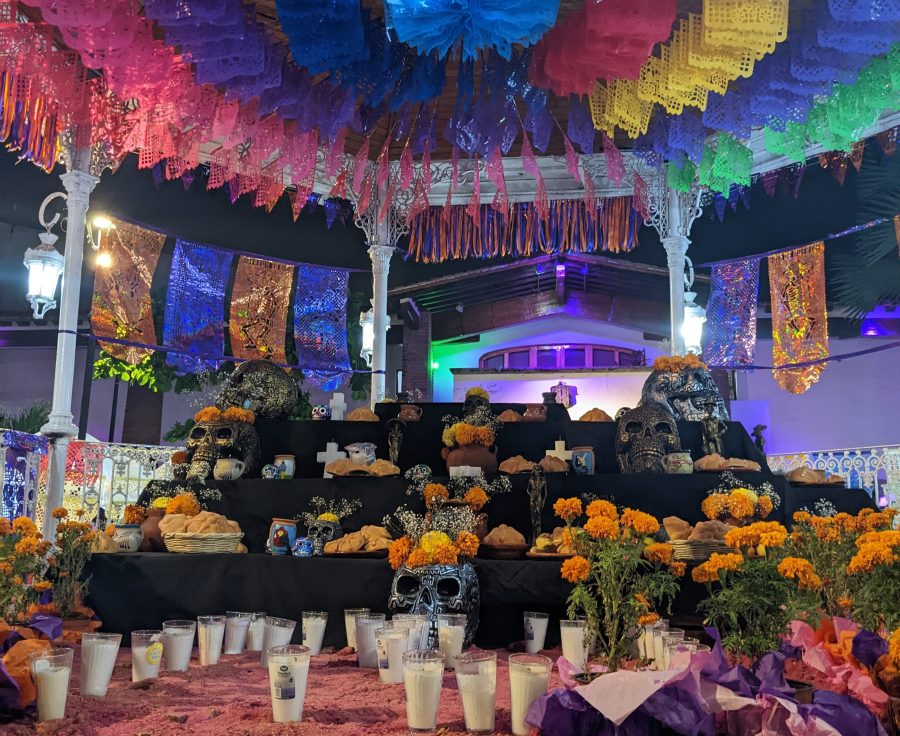
  • Día de los Muertos (Mexico): This isn’t your typical day of mourning. It’s a full-on celebration where families create altars adorned with marigolds, photos, and the favorite foods of their loved ones. It’s believed that on this day, the spirits come back to visit, and I can’t help but think how Phillip would’ve loved popping in for a quick hello, probably to critique my taste in music, or what show I was watching while eating all the sushi.
  • Bon Festival (Japan): Every summer, Japanese families celebrate Obon, where they believe their ancestors’ spirits return home. They light lanterns to guide them back, and the whole thing wraps up with the Bon Odori dance. Imagine a family reunion where the guests are a little more… ethereal. It’s a comforting thought, though—like the ultimate “they’re always with us” feeling.
  • Mourning Beads (Middle East): In Iran and Turkey, it’s common to use prayer beads to recite verses in memory of those who’ve passed. I like the idea of having something tangible to hold onto during tough moments—kind of like a stress ball, but with deeper spiritual meaning.
  • Ghanaian Fantasy Coffins (Ghana): Ghanaians know how to make a statement, even in death. They craft custom coffins that reflect the deceased’s passions or profession, from cars to fish to, I kid you not, airplanes. It’s a way to send someone off with style, and honestly, I think Phillip would’ve liked that. Maybe a tennis racket-shaped coffin for him?
  • Sky Burials (Tibet): This one’s a bit intense, but the symbolism is beautiful. In Tibet, some families leave their loved ones on mountaintops to be consumed by birds, symbolizing the soul’s return to the natural world. It’s a powerful reminder of the interconnectedness of life, even if it’s not quite my cup of tea.

For me, walking 1000 steps x the age he would be on his birthday and on the anniversary of Phillip’s passing is like a cardio session for the soul. It’s not just about the steps, though—each one is a little meditation, a moment to reflect, laugh, cry, and occasionally mutter, “You owe me for this one, buddy” under my breath. I even eat his favorite foods on those days. Yes, it’s a weird way to feel close to him, but sometimes grief makes you do strange things—like eating an entire burger and pretending he’s there making fun of my clumsy eating habits.

We also work with the Canadian Mental Health Association (CMHA) to help other young people get the support they need through Equipped. It’s a small way of turning our loss into something meaningful, of giving Phillip’s story a chance to help others.

Everyone’s grief looks different. For some, it’s a quiet moment by a graveside; for others, it’s turning up the music and dancing with their tears. If you’re struggling to find your way, I hope some of these rituals resonate with you—or at least make you feel a little more human in the chaos of it all. You’re allowed to cry, to laugh, to eat too many fries, or to scream-sing in the car. The important part is finding what helps you hold onto that connection, whatever that looks like.

Five years in, I’m still figuring this out. Grief doesn’t have a timeline—it’s more like a messy, ongoing conversation with someone who isn’t physically there anymore. But I hold onto the belief that love doesn’t die. It sticks around, like glitter after a party. It shows up in the walks, the cheeseburgers, and the little moments where I feel Phillip beside me, probably rolling his eyes but smiling all the same.

If you are grieving, please know you’re not alone. Take a deep breath, do what you need to do, and remember that sometimes, it’s okay to laugh through the tears. And if you or someone you know needs support, check out Equipped by CMHA Calgary, a resource center made possible by a donation in Phillip’s name.

Do you have a ritual or tradition that helps you remember a loved one? Drop it in the comments—let’s create a space where we can share our stories and support one another, one awkward, beautiful, messy memory at a time.

Mental Health in the Workplace

May is Mental Health Awareness month, so I thought it would be fitting to talk about Mental health in the workplace – it’s a subject that’s often avoided or hushed up. But with 1 in 5 adults in Canada experiencing a mental illness each year, it’s time to start talking about it. That’s approximately 6.7 million people. Additionally, it’s estimated that suicide accounts for approximately 4,000 deaths per year in Canada, making it one of the leading causes of death in the country. 

These numbers highlight the importance of prioritizing mental health and suicide prevention efforts in Canada. Mental health issues are just as important as physical health issues, and they can affect anyone – your boss, your colleagues, and even you.

As someone who’s lost their brother and friends to suicide, and dealt with my own mental health struggles, I know how important it is to prioritize mental health in the workplace. After all, we spend a good chunk of our day at work, so it’s important that it’s a safe and supportive environment.

Recognizing Signs of Mental Health Struggles in Coworkers

Have you ever noticed a coworker who’s seemed off lately? Maybe they’re quieter than usual or seem more irritable than usual. It’s important to recognize that these could be signs of a mental health issue. And let me tell you, as someone who’s dealt with grief, depression and anxiety, it’s not always easy to talk about.

That’s why it’s important to approach the issue with empathy and understanding. Simply being there to listen and providing a safe space to talk can make all the difference. And if you’re unsure about how to approach the issue, don’t be afraid to ask your coworker how they’re doing.

Supporting Coworkers Who are Struggling

Once you’ve recognized signs of mental health struggles in your coworker, it’s important to provide support. This could be as simple as directing them to your company’s employee assistance program (EAP), or just listening to them when they need to talk.

I remember when I was struggling with my own mental health, just having someone there to listen was incredibly helpful. It’s amazing how much of a difference a supportive coworker can make.

Supporting a coworker who is struggling with their mental health can be challenging, but it’s important to approach the situation with empathy and understanding. Here are some tips on how to support a coworker who is struggling with their mental health:

Be an Active Listener: One of the most important things you can do to support a coworker who is struggling is to be an active listener. Listen without judgment, and let them know that you’re there for them. Sometimes, just having someone to talk to can make all the difference. Here’s a great article from the Canadian Mental Health Association (CMHA) on active listening: The Art Of Listening: Six Steps To Being A Better Listener or try some practice conversations https://conversations.movember.com/en/ 

Encourage Them to Seek Professional Help: While you can provide support, it’s important to remember that you’re not a mental health professional. Encourage your coworker to seek professional help, such as an EAP, Mental Health First Aider or a Therapist. Here’s an article from the CMHA on how to talk to someone about seeking help: How to Encourage Someone to Go to Therapy 

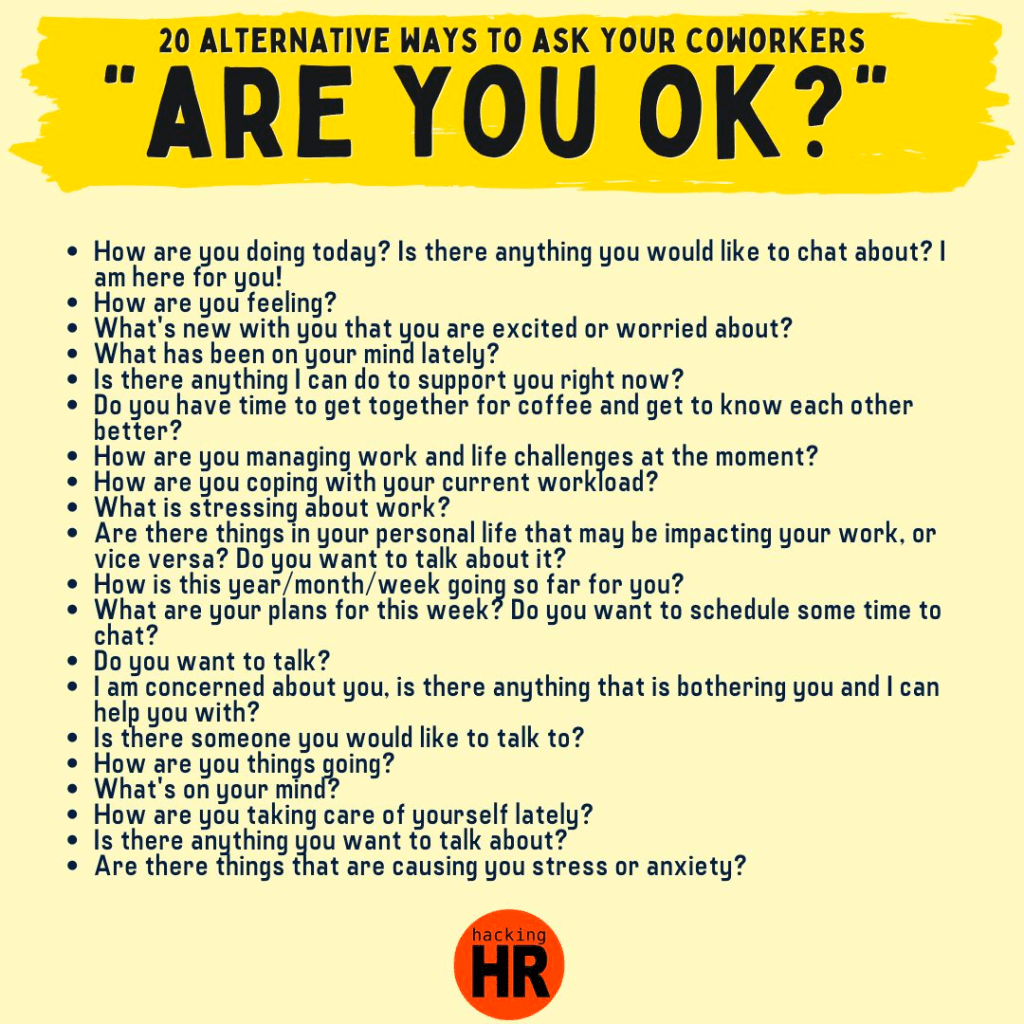
Check-In Regularly: Checking in regularly with your coworker can help them feel supported and cared for. Even a simple text message or email can make a big difference. Try not to put too much pressure on them (there’s a delicate balance) a simple text (or slack) could be something like:

“Thinking of you. No pressure to respond.”

“How are you holding up?”

How are you today?

I’ve been thinking about you lately. How are you doing?

“Is there any type of support you need right now?”

Here’s a resource from Calm on how to have a conversation about mental health: A Practical Guide to Having Mental Health Conversations with Your Colleagues or  try some practice conversations through Movember Conversations.

Respect Their Privacy: While it’s important to support your coworker, it’s also important to respect their privacy. Please don’t ever share their personal information with others without their consent.

Supporting Yourself

But while it’s important to support your colleagues, it’s equally important to take care of yourself. As someone who’s dealt with burnout in the past, I know how important it is to prioritize self-care. You know that saying “If you don’t make time for your wellness, you will be forced to make time for your illness.” It is absolutely right.

Now, let’s talk about how to take care of your own mental health in the workplace. Here are some tips:

Take Breaks: Taking breaks throughout the day can help you recharge and prevent burnout. Try taking a walk outside (or at a treadmill desk, if the weather sucks) during your lunch break, or practicing mindfulness during a quick break. Here’s a great article from “Health Shots” on the importance of taking breaks: Here’s how taking a break from work can actually boost your performance | HealthShots 

Prioritize Self-Care: Self-care looks different for everyone, but it’s important to prioritize it. This could include practicing yoga, meditation, or spending time with loved ones outside of work. For me, that looks like: taking time to workout, peloton rides, writing, painting, reading or cooking a really fabulous meal for myself.

Here’s an article from the CMHA on self-care: https://cmha-yr.on.ca/what-you-need-to-know-about-self-care/ 

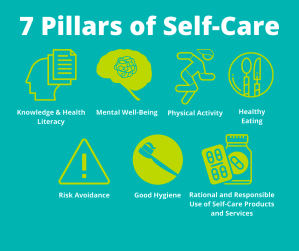
The 7 Pillars of Self Care

  1. Knowledge and Health Literacy
  2. Mental Well-Being
  3. Physical Activity
  4. Physical Activity
  5. Risk Avoidance
  6. Good Hygiene
  7. Rational and Responsible Use of Self-Care Products and Services

Credit: https://cmha-yr.on.ca/what-you-need-to-know-about-self-care/

Use Your Resources: Many companies offer mental health resources, such as an EAP or mental health days. Don’t be afraid to use these resources when you need them. Here’s a resource from the Government of Canada on mental health in the workplace: Mental health in the workplace – Canada.ca and another great resource from the Mental Health Commission of Canada Workplace Mental Health – Mental Health Commission of Canada.

One FREE Resource, near and dear to my heart:
Equipped : an online mental health education platform that offers free, self-directed courses for young adults. Created in memory of my brother Phillip.

www.equipped.youthsmart.ca

Set Boundaries: Setting boundaries can help you maintain a healthy work-life balance. Don’t be afraid to say no to extra work or overtime if it’s not sustainable for you. Here’s a resource from the Career Contessa on setting boundaries: 8 Ways to Establish Healthy Boundaries at Work | Career Contessa 

By supporting your coworkers and taking care of your own mental health, you can create a positive and supportive workplace environment. Remember, mental health is just as important as physical health, and it’s up to all of us to prioritize it in the workplace.

Best Practices for Creating a Positive Mental Health Environment in the Workplace

Creating a positive mental health environment in the workplace is key. This includes implementing mental health policies and resources, such as an EAP or mental health days, and fostering a culture of open communication and non-judgment.

I’ve been lucky to work for a few companies that value mental health and wellbeing. They provide an EAP, managers encourage us to take time off when we need it and Short Term Disability benefits to help you put your mental health first. It’s made a world of difference in my own mental health.


Remember, mental health issues are just as important as physical health issues. Taking care of yourself and your colleagues should be a top priority in the workplace. With a little bit of empathy, understanding, and support, we can create a workplace that’s supportive of mental health and wellbeing.

Let’s make mental health a priority in the workplace – our mental health depends on it.

About the Equipped Program: Everyone Has Mental Health

In September 2022, the Canadian Mental Health Association – Calgary Region launched EQUIPPED.

The EQUIPPED program came to be, thanks to an anonymous donation that was provided to CMHA Calgary in memory of my younger brother, Phillip Thomas.

Phillip passed away on September 13, 2019, at the age of 25, following a mental health battle. If this program can help just one person, then in my mind it is a success and a beautiful legacy for my brother to leave. You can learn more about Phillip in the “In Memory” section of the site or here.

“Our hope is that this program equips teens and young adults with the tools and resources they need to cope with mental health struggles, build resilience, and end the stigma around mental health. CMHA Calgary has helped our family survive this terrible tragedy, and we hope this program can help prevent another one.”

Thomas Family

EQUIPPED is a FREE program for anyone in the world and currently offers three courses: Mental Health Awareness, Stress Management & Healthy Coping and our newest module Skills for Being There (thanks to the RBC Foundation). Each course has a workbook and provides the opportunity for young adults to brainstorm and explore the concepts taught through activity-based learning.

MENTAL HEALTH
AWARENESS

This module is designed to create a better understanding of mental health and how to support your mental well-being.

STRESS MANAGEMENT
AND HEALTHY COPING

This module is designed to equip you with the knowledge and skills to deal with stress and find healthy coping techniques.

SKILLS FOR
BEING THERE

This module is designed to provide the skills and resources to support the people in your life as they face challenges.

The aim of the courses is to equip young people with mental health knowledge and skills to understand the things they can do to help support their own mental health.

Looking for more resources? There is a list of resources for other supports is also provided at the end of EQUIPPED courses and on the main EQUIPPED website.

Please feel free to share with your networks (reach out to me for any handouts, poster or social assets) and let’s work to end the stigma around mental health through education.

Should there be interest and funding, more courses may be developed.

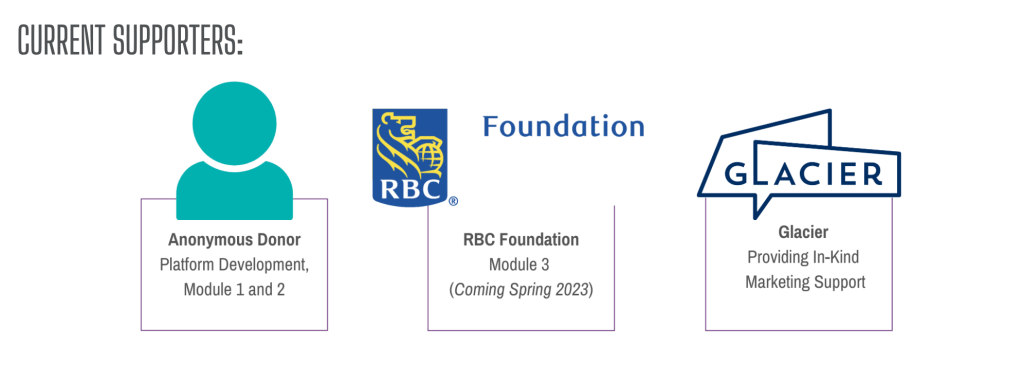
From the bottom of my heart, thank you to all of our incredible supporters.

If you know of someone who may want to support EQUIPPED, please contact CMHA Calgary’s Community Education Team at education@cmha.calgary.ab.ca.

Why the Calgary Stampede is my favourite time of year.

As a born and raised Calgarian, at times I have perhaps taken this annual event for granted. Now that I have spent the last few years living in Toronto, I realize how much the Stampede has impacted the person I am today. I remember some of my fondest memories of my youth occurring during the stampede and yet many of my friends out east have yet to experience or even understand the significance of those 10 days in July. 

I have insisted that I could not possibly sum it up in words but I am going to give it my best shot. 

Every year (barring pesky pandemics), the Calgary Stampede’s 10-day festival starts on the first Thursday of July. The Stampede begins with a sneak peak on the eve of the first Thursday, with the fairgrounds (rides and eats), the opening grandstand show and the first performers in tents across the city. For me, the real kick off is the Stampede Parade. I remember the excitement of having my dad head down early to secure the prime parade seats for us kids by the Calgary Police station (for those of you who don’t know, my dad was CPS for 25 years) and the excitement of taking the bus( the #1) with ALL my best friends and their parents and siblings from West Hillhurst to the parade route. We had blankets, snacks, children’s beverages…and wait…there were separate adult beverages – I SEE YOU MOM AND DAD (Zero judgment) 


We would enjoy the parade and then enjoy an action packed day of festivities…I imagine naps were involved but it has been a few too many years to confidently speak to those. Every year the city carefully selects an incredible parade marshall to lead the parade, this year, Yellowstone‘s very own star; Kevin Costner, the legendary actor, director, producer and musician leads the Stampede Parade July 8. 

Fun Fact: Many moons ago, I had the honour of participating in the parade as a CJAY92 road crew girl with Jerry and Redawg (Good ol’ days of JUGZ – more on that in a post another day). 

The fair grounds are essentially the same as the CNE(or so I have been told – maybe this year will be the year! ); delicious, yet artery-clogging-diabetes-inducing treats, slightly sketchy rides for all ages (funhouses, log rides, haunted houses, gondolas, rickety roller coasters, etc.) and beer gardens all around. 

In my humble opinion, what makes the stampede special is the community spirit, the musical guests and the incredible rodeo. 

The Community Spirit. 

Alright, so let me first remind everyone that I was born and raised in Calgary Alberta at the Rockyview hospital…but I am the first to say that Calgary is best described as the offspring of Texas and Florida…with free healthcare! Watching this city come together, to dance, drink and celebrate year after year has been beautiful. I have had the privilege of experiencing the stampede as a child, teen, bartender, corporate event planner, attendee, sponsor, and this year as a regular ol’ guest. 

My little brother’s favourite part was the free stampede breakfasts, he and his friends would plan their itinerary in advance to visit as many free community breakfasts around the city as possible. The majority of breakfasts would include the standard pancakes and juice, but some would go all out with bacon, eggs, pancakes, sausages, mimosas, caesars and more!

The city is filled with a plethora of Cowboy attire, mainly cowboy hats and boots and most notably the token White Cowboy hat with the red ribbon. 

The corporate events were in my humble opinion better than any Christmas/ winter holiday party I have experienced in my life. Companies take their teams to various Stampede festivities followed by an open bar on the grounds or at a legendary local establishment such as my old employers Cowboys Calgary, or my other stomping grounds Ranchmans (the pole climb is a TENT POLE EVENT don’t @ me).  

The Calgary community really bands together on those 10 days every single year, and it was especially evident after the 2013 flood when the community really showed up as the Calgary core was devastated with unprecedented flooding that damaged homes and businesses and our beloved Stampede grounds. “Come Hell or High Water” was the motto and to this day seeing the thousands of volunteers show up to help their neighbours in the aftermath was one of the most incredible events I have witnessed first hand. All of those volunteers came together to ensure that the show could still go on. 

The Music. 

Alright, it’s time to address the music, for those who know me, I LOVE Country music, I do not care how much you hate it, Country music warms my soul – especially on a hot summer night. I was raised on it (among 60s & 70s soul, Dean Martin and Frank Sinatra) and I will always dance to it, sing to it and drink to it. Any country music lover will appreciate how many restaurants and bars around the city will “Go Country” for those 10 days. However, there are so many non country artists that play at establishments like at Cowboys Calgary, Wildhorse Saloon the saddledome and various smaller venues around the city to appease your musical craving.

Hot Tip: If you are planning to go to the fairgrounds, there are free concerts included! Make sure you check out who is playing on the CocaCola stage (It’s family friendly & Free!!) and Nashville North (Also free, 18+ — Get there early because the lines can be brutal).  

Wildhorse Saloon. 2022.

The Rodeo. 

Every afternoon at 1:30 MST top athletes in the rodeo circuit from across North America compete across six different events for 1.5 Mil in prize money. 

Every evening at 7:45 MST, corporate sponsored Chuckwagon races (this is for you gamblers!) with 27 Chuckwagon drivers, supported by their outriders and 162 horses vie for prize money and bragging rights. Whether you go with coworkers, family or friends there’s an opportunity to have a couple cold ones, put some money down on your pick and cheer on the best of the best. 

The Grandstand show follows the nightly chucks with incredible performances by the Young Canadians and fireworks closing out the show, every single night.
Hot Tip: For those of you at tents, it’s a great way to gauge midnight!)

Animal Care; I know that there are a lot of people who worry about the treatment of animals involved in the Stampede; all I can say is that as a person who has toured the barns and had friends compete, I am confident that the animals I have seen have been treated with incredible care and love through their lives. 

The petting farm; for those kidlets and adults who love to see animals up close and personal there is an entire section of the grounds dedicated to education on different animals and breeds from horses to goats to cows and pigs! Sometimes they even bring the fresh babies!!

What else? Well if you aren’t sold by now… I probably won’t sell you but there are a couple more events that deserve some spotlight!

Dog Bowl – If you love dogs – this show is for you! Watch elite dog athletes compete for #1!

Ranchmans Pole Climb

Ladies and gentlemen, this event is a Vanessa favourite; a perfect combination of three of my favourite things; firemen, country and drinks. Every year, the Calgary Burn Society puts on this incredible charity event where our fabulous Calgary Firemen (Usually from the Hot Stuff Calendar) race rodeo Cowboys to the top of a metal pole. You can bid on them in advance, there are a LOT of women who attend and it’s all for a good cause (Also great eye candy for EVERYONE). 

Fun Fact: One of my best friends was in the pole climb many moons ago and I made this sign (And then had to make another one for another buddy last minute): 

New this year: Whiskey Rose

Newest tent to check out is 17th ave’s newest Nashville style bar (My personal favourite!) They have an incredible lineup of local talent lined up and some of the best humans in the biz. Can’t wait to see what they have in store for their first Stampede!

On top of everything listed above, the stampede is a great time for BBQs with the people you love and a couple quiet ones under the sun, so if you’re looking for a sign to finally check out the Calgary Stampede, this is it.

Black History Month: Films to Watch

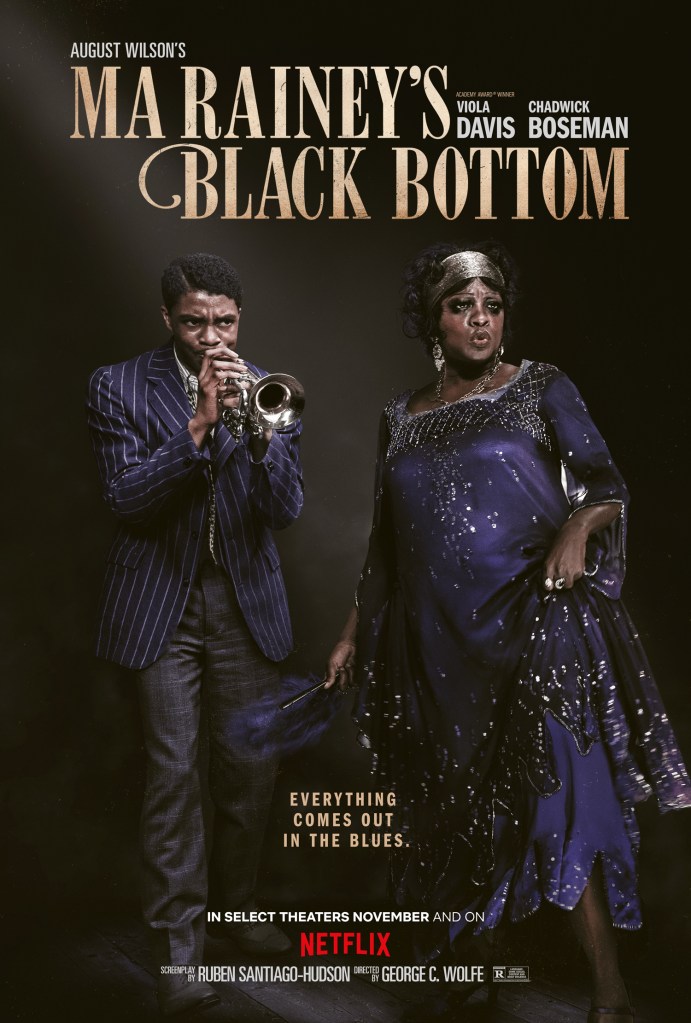
In honour of Black History Month, I have shared a carefully curated list of films, series and clips to shed light on Black history and experience in Canada and throughout the rest of the world. There is something for everyone in this list from Chadwick Boseman’s final powerful performance in Ma Rainey’s Black Bottom to Chris Rock’s documentary on the hair in black culture (one of my personal favourites) and Harriet Tubman’s heroic story. 

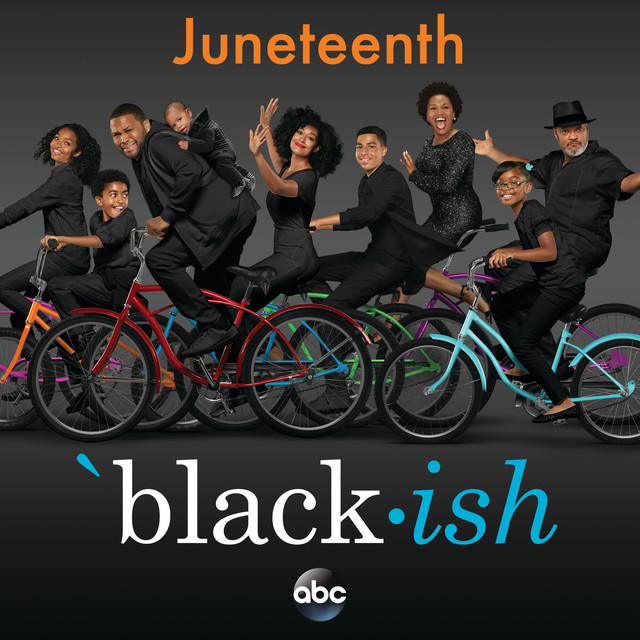
Short on time? Check out a short yet powerful clip from Grey’s anatomy. Looking for a series to binge with the kids? Try Black-ish. Prefer documentaries we have incredible Canadian docs in there too! 

I encourage you to watch any episode, film or clip from the list below and share your learnings in the comments below!

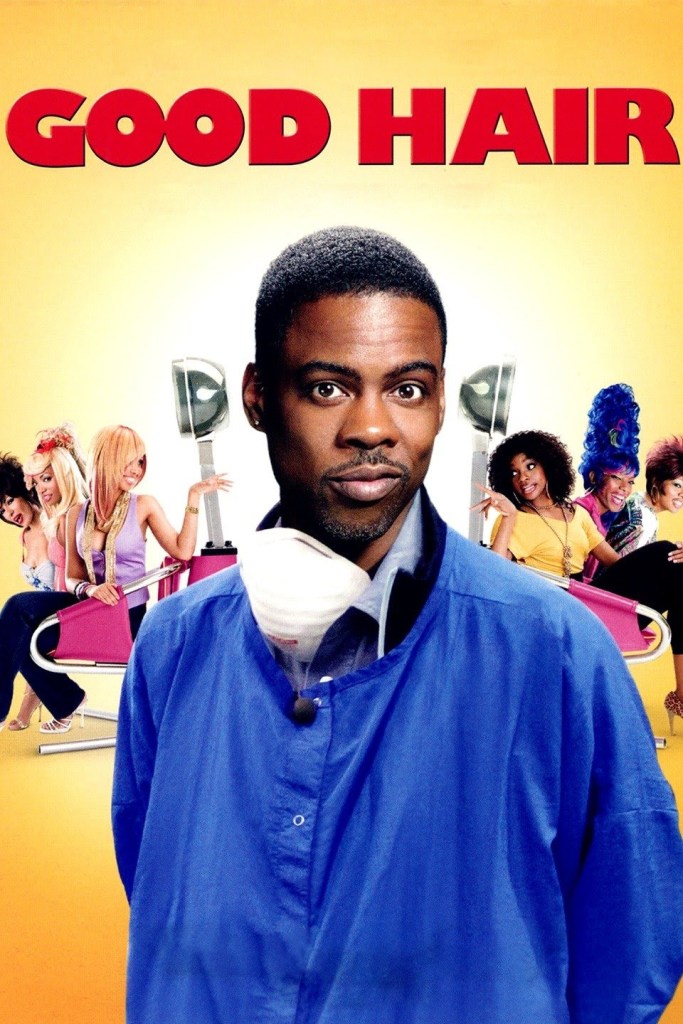
Good Hair

Feature Film on Amazon Prime
Family Friendly 

Synopsis: Prompted by a question from his young daughter, comic Chris Rock sets out to explore the importance of hair in black culture. Rock interviews celebrities such as Ice-T and Raven Symone, and visits hair salons, stylist competitions and even an Indian temple to learn about hair culture.

Reflection: What did you learn about the significance of hair culture within the black community?

Mandela Long Walk to Freedom

Feature Film on Apple TV
Family Friendly

Synopsis: The remarkable life of South African revolutionary, president and world icon Nelson Mandela (Idris Elba) takes centre stage. Though he had humble beginnings as a herd boy in a rural village, Mandela became involved in the anti-apartheid movement and co-founded the African National Congress Youth League. His activities eventually led to his imprisonment on Robben Island from 1964 to 1990. In 1994, Mandela became the first president of democratic South Africa.

Reflection: After watching this film, what was your biggest learning when it comes to Nelson Mandela’s fight for equality?

Hidden Figures

Feature Film on Disney+
Family Friendly

Synopsis: Three brilliant African-American women at NASA — Katherine Johnson, Dorothy Vaughan and Mary Jackson — serve as the brains behind one of the greatest operations in history: the launch of astronaut John Glenn into orbit, a stunning achievement that restored the nation’s confidence, turned around the Space Race and galvanised the world.
Reflection: Tell us what you learned about the struggles faced by black women in this film? What stood out to you most?

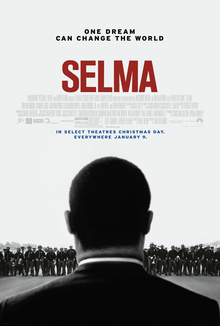
Selma

Feature Film on Amazon prime
Family Friendly

Synopsis: Although the Civil Rights Act of 1964 legally desegregated the South, discrimination was still rampant in certain areas, making it very difficult for Blacks to register to vote. In 1965, an Alabama city became the battleground in the fight for suffrage. Despite violent opposition, Dr. Martin Luther King Jr. (David Oyelowo) and his followers pressed forward on an epic march from Selma to Montgomery, and their efforts culminated with President Lyndon Johnson signing the Voting Rights Act of 1965.

Reflection: What did you learn about the Voting Rights Act? Do you think that it is effective in the present day?

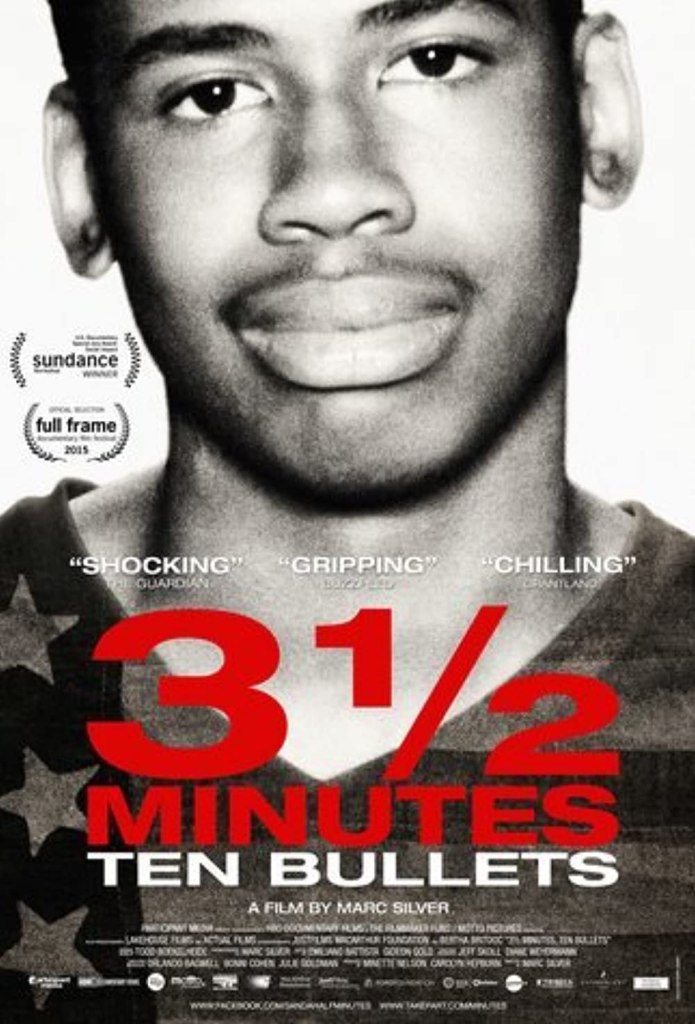
3 1/2 Minutes – Ten Bullets

Documentary on Vimeo 

Not recommended for children

Synopsis: Filmmaker Marc Silver uses the shooting death of black teenager Jordan Davis to examine Florida’s `Stand Your Ground’ self-defence law.

Americans are automatically considered more “threatening” and their deaths more justified regardless of their actions (or lack of weaponry)
Reflection: With that in mind, do you think that the “Stand your ground” defence should be revised?

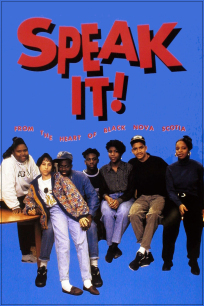
Short Doc: Speak it! From the Heart of Black Nova Scotia

Canadian – Documentary Online
Family Friendly

Synopsis: Follows a group of youth in Nova Scotia seeking education about their black history and justice for their contemporary black community. The discrimination some black youth face—at school, when seeking jobs, or simply out on the streets—is heartbreaking to witness, but the hopefulness, enthusiasm, and strength of the young people profiled in this film is truly inspiring. Emotions run high in critical discussions profiled in the film: skip to the 20:11 mark to catch a heated debate about interracial relationships and the social stigma associated with them. The passion of the young man speaking to his classmates about the need to fight stereotypes and discrimination is very moving.

Reflection: The debate about interracial relationships continues in present day – what was your biggest takeaway from this scene?

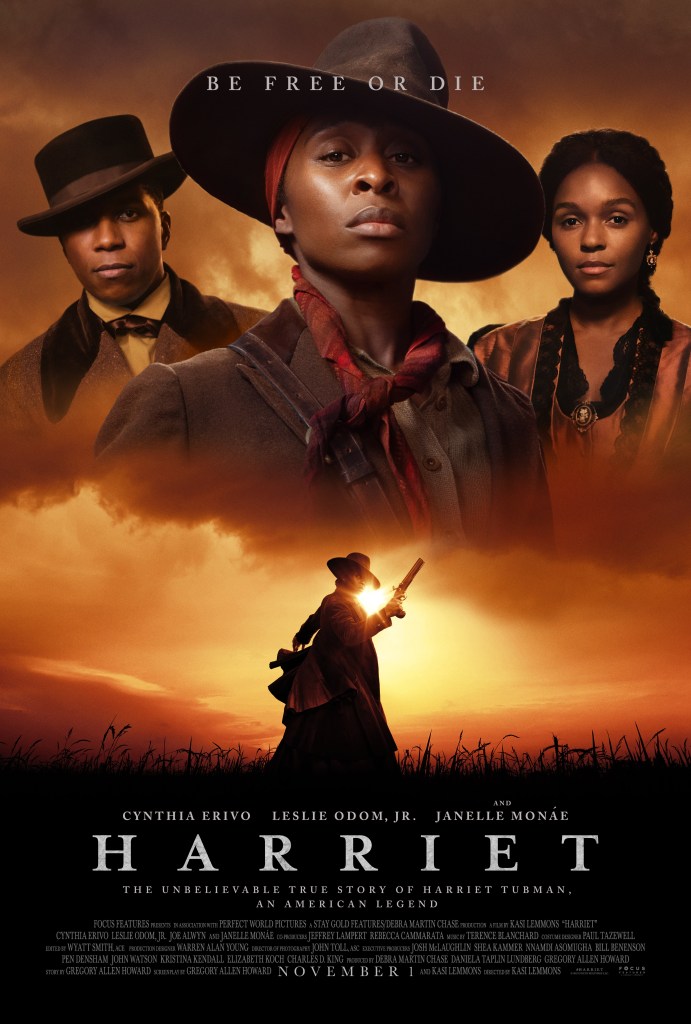
Harriet

Feature Film on Netflix
Family Friendly

Synopsis: From her escape from slavery through the dangerous missions she led to liberate hundreds of slaves through the Underground Railroad, the story of heroic abolitionist Harriet Tubman is told.

After viewing Harriet, what are your thoughts about the choices Americans made in response to slavery.

Reflection: Why did some slaves choose to escape, while others stayed? Why did some Americans risk participating in the Underground Railroad, while others did not?

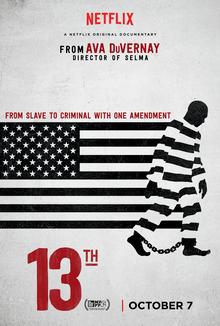
13th

Feature Film on Netflix
Not reccomended for children

Synopsis: Filmmaker Ava DuVernay explores the history of racial inequality in the United States, focusing on the fact that the nation’s prisons are disproportionately filled with African-Americans.

Reflection: What was your biggest learning about US prisons?

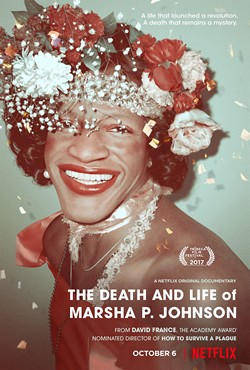
The Death and Life of Marsha P. Johnson

Documentary on Netflix
Family Friendly

Synopsis: When Stonewall Veteran and beloved Greenwich Village personality Marsha P Johnson turned up dead shortly after Gay Pride in 1992, it was the latest in a series of murders, gay bashings, and “mysterious” deaths in the local gay community. Johnson is seen in footage at a political march shortly before this, at an action trying to draw attention to these hate crimes. Tragically, Johnson then becomes the next victim. Like the other suspicious deaths, Johnson’s death is quickly dismissed as a “suicide”, even though there is no evidence that Johnson was suicidal, and significant evidence that Johnson was harassed and stalked on that very night. Demonstrations are held to protest the lack of police investigation, but it is not until decades later that transgender crime advocate Victoria Cruz succeeds in getting some answers.

Reflection: What is the significance of the intersectionality of being both black and transgender? That is, what does the culmination of being black and transgender mean for people identity this way, as opposed to people who only identity as black, or only identify as transgender?

Ma Rainey’s Black Bottom

Feature Film on Netflix
Not suitable for children

Synopsis: Tensions and temperatures rise over the course of an afternoon recording session in 1920s Chicago as a band of musicians await trailblazing performer, the legendary “Mother of the Blues,” Ma Rainey (Academy Award® winner Viola Davis). Late to the session, the fearless, fiery Ma engages in a battle of wills with her white manager and producer over control of her music. As the band waits in the studio’s claustrophobic rehearsal room, ambitious trumpeter Levee (Chadwick Boseman) – who has an eye for Ma’s girlfriend and is determined to stake his own claim on the music industry – spurs his fellow musicians into an eruption of stories revealing truths that will forever change the course of their lives. Adapted from two-time Pulitzer Prize winner August Wilson’s play, MA RAINEY’S BLACK BOTTOM celebrates the transformative power of the blues and the artists who refuse to let society’s prejudices dictate their worth.

Ma Rainey’s Black Bottom plays peekaboo with the audience and it reveals a different face to whoever is watching. 

Reflection: Take a moment and reflect on which character you identify with this film – does it make you uncomfortable? Tell us!

When They See Us

Series on Netflix
Not recommended for young children

Synopsis: In 1989, a jogger was assaulted and raped in New York’s Central Park, and five young people were subsequently charged with the crime. The quintet, labelled the Central Park Five, maintained its innocence and spent years fighting the convictions, hoping to be exonerated. This limited series spans a quarter of a century, from when the teens are first questioned about the incident in the spring of 1989, going through their exoneration in 2002 and ultimately the settlement reached with the city of New York in 2014.
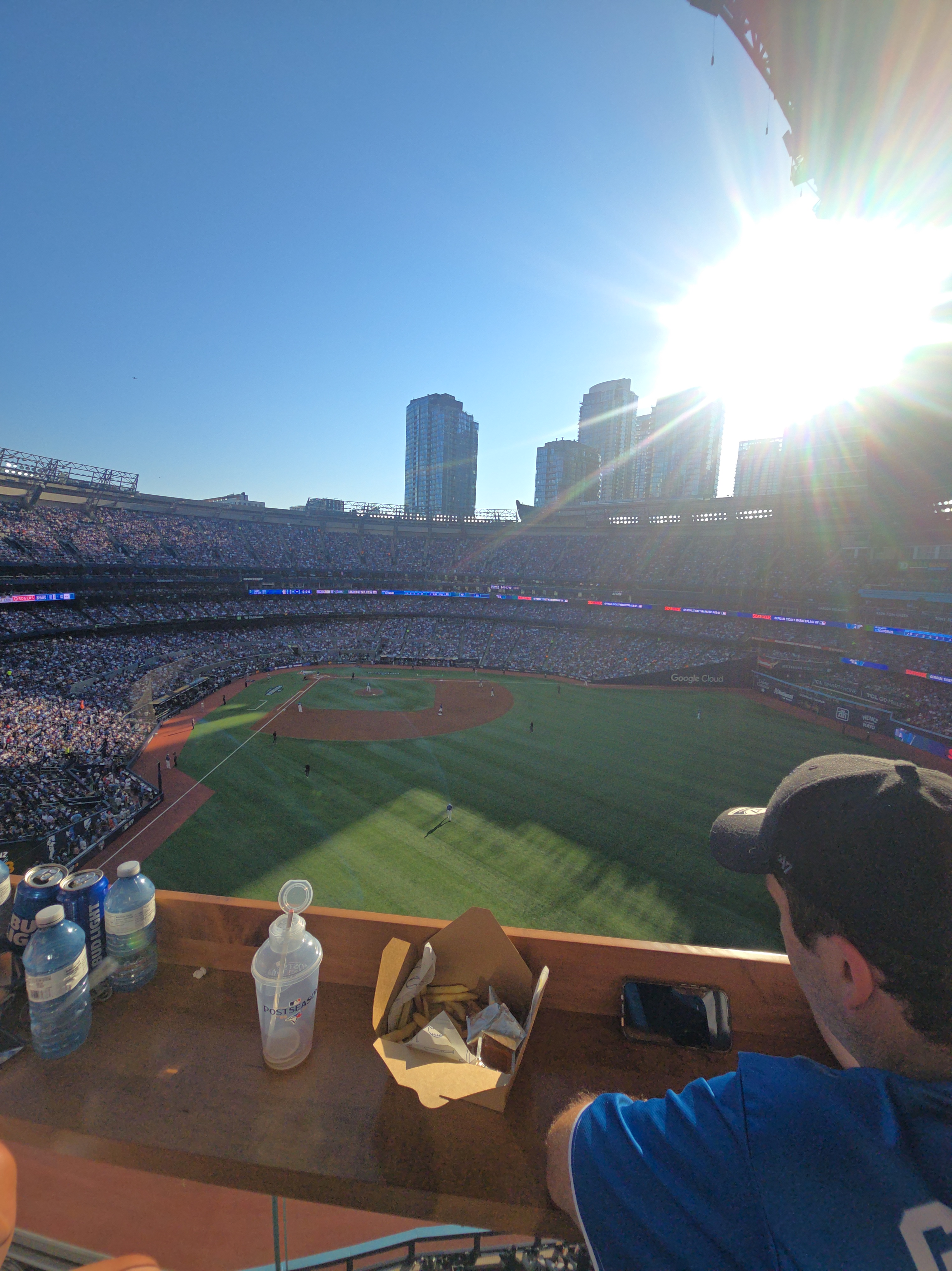

The series refers to the black teens as “animals”, which immediately makes each teen seem like a threat. Suspecting someone because of their race still happens today. And according to a 2018 Bureau of Justice Statistics report, police are twice as likely to use force against people of colour.

Reflection: What can we do? Share what you think we as a society can do to change this.

Proud Family, Season 1, Episode 15: I Had A Dream

Series on Disney+
Family Friendly

Synopsis: While doing a report for black history, Penny is caught in a windstorm and gets sent back to the year 1955 where everything she knew is gone.

Reflection: How does this cartoon (created specifically for children) teach children about race and racism? How does knowing your history inform how you understand your present day life and privileges?

Ruby Bridges

Feature Film on Disney+
Family Friendly

Synopsis: In 1960, a six-year-old African-American girl named Ruby Bridges helped to integrate the all-white schools of New Orleans. Although she was the only black girl to come to the school she was sent to, and since all the white mothers pulled their children out of class, she was the only one there. Although she faced a crowd of angry white citizens every day, she emerged unscathed, physically or emotionally. Encouraged by her teacher, a white woman from the North named Barbara Henry, and her mother Lucille, and with her own quiet strength, she eventually broke down a century-old barrier forever, a pivotal moment in the civil-rights movement.

Reflection: How does the camera work in the film share the perspective for Ruby Bridges? Does it effectively communicate with the audience how Ruby experiences the events of the film?

Harlem

Series on Amazon prime
Not suitable for children

The show chews through so many socio political issues one could mistake it for a spontaneous babble on Clubhouse. Revolving around the lives of Black female friends Camille, Angie, Quinn, and Tye, the quartet navigate a changing Harlem in New York. Their lives, too, are changing.

On the show, white supremacy is the culprit. Harlem is shapeshifting into a capitalist husk, Black traditions and heritage hollowed out to create a suitable environment for whiteness. Camille (Meagan Good), who is an adjunct professor of anthropology of sex and modern love at Columbia University, makes astute observations on social media about her beloved neighborhood being gentrified. Among the issues Harlem addresses with jabs of humour during its 10 episodes — including microaggressions and cultural appropriation — the most gravitas lands on episode 6, titled “The Strong Black Woman.”

Reflection: What did you learn about micro-aggressions and cultural appropriation?

Black-ish (Season 4, Episode 1)

Series on Disney+
Family Friendly

Synopsis: Dre Johnson (Anthony Anderson) has it all – a great job, beautiful wife Rainbow (Tracee Ellis Ross), four kids and a big home in a classy neighbourhood – but as a black man, he begins to question whether all his success has brought too much cultural assimilation for his family. With the help of his father (Laurence Fishburne), Dre begins to try to create a sense of ethnic identity for the members of his family that will allow them to honour their background while preparing them to embrace the future.

While there are many incredibly educational episodes in this series – we recommend that you watch the episode covering Juneteenth – Black-ish episode (season 4, episode 1) 

Reflection: Share what you learned about this important date!

Only have a few minutes?

Check out this short clip about the talk: ‘Grey’s Anatomy’ Tackles ‘The Talk’ In Wrongful Police Shooting Episode Season 14, Episode 10

Synopsis: Grey’s Anatomy tackled unconscious bias and wrongful police shootings in this episode, with one of the main character’s giving “the talk” to her young black son.

The episode shows the doctors facing a wrongful shooting when a young black boy comes to the emergency room after being shot. The young man was spotted breaking into his own house in a wealthy neighbourhood after he was locked out. He was then shot by police while reaching for a phone in his pocket.

This clip was incredibly powerful, and while the show is based in the US, these conversations take place in Canada every day – 

Reflection: What is your biggest take away after watching this?

HONOURABLE MENTION – COMING SOON
Series: The Porter
Canadian Series on CBC
Synopsis: Inspired by real events and set in the roar of the 1920s, THE PORTER (8×60) follows the journeys of an ensemble of characters who hustle, dream, cross borders and pursue their ambitions in the fight for liberation – on and off the railways that crossed North America. It is a gripping story of empowerment and idealism that highlights the moment when railway workers from both Canada and the United States joined together to give birth to the world’s first Black union. Set primarily in Montreal, Chicago and Detroit as the world rebuilds after the First World War, THE PORTER depicts the Black community in St. Antoine, Montreal – known, at the time, as the “Harlem of the North.” They’re young, gifted and Black, from Canada, the Caribbean, and the U.S. via the Underground Railroad and through the Great Migration, and they find themselves thrown together north and south of the colour line, in an era that boasts anything is possible – but if change isn’t coming for them, they will come for it. By any means necessary. https://www.cbc.ca/mediacentre/program/the-porter 
This series airs Feb 21, 2022 on CBC – filmed in Winnipeg and covers the Black Community in Montreal in the 20s. We can’t wait to tune in and learn more about our Canadian history – plus it’s filmed in Winnipeg!

Not only can you learn something new from each film, clip and/or series but something that each of these films done is it helps many of us feel seen.

Representation matters.

Black Lives Matter.

February and Forever: Celebrating Black History today and every day.