The past few weeks have been a bit of a roller coaster of emotions for me, particularly regarding the racial injustices that black people continue to experience in the United States, and have caused me to reflect on my own experiences throughout my life.
Back in the 1980s, my parents did not have much support for their relationship from either side of their families. My dad, originally from Grenada, met my Hungarian mother at the Calgary Tennis club, 36 years later they are still married and very much in love.
If anyone has seen the movie “Save the last dance” imagine Kerry Washington’s character explaining to Julia Stiles all of the reasons why she[Julia] shouldn’t be with her brother, this is what my dad’s side of the family felt about him being with a white woman.
On my mother’s side, there were several comments of racial stereotypes that were shared with my parents, upon the announcement of their engagement. One in particular stood out from the rest; “You’re too sensitive to have mixed children”. Now, as one of their mixed children, it took me many years to really grasp what was really being said: “Your children will not be treated as well as you have been, and it is going to be hard”.
In my childhood, I attended french immersion catholic schools in Calgary, Alberta. I’d like to point out that the lack of diversity in my schools were so prevalent that to this day I can count how many other visible minorities were in my primary and high school on both hands. I grew up being picked on because I had my hair in braids most of the time which was gross according to my peers and on the rare occasion that my hair was out, I was told it was an ugly mop and one day they went a step further and punched me in the nose. Fun fact: I was in just as much trouble as the little white boy who gave a bloody nose and was told it would be on my permanent record.
As a young child I never really understood why I was singled out for my hair, or why comments on my skin color being darker but not “too dark” made me so uncomfortable. I finally begun to understand why these comments didn’t sit right with me, as a young teen. One day, as I was walking down the street after a concert with a few white friends and had 4 older white men yell out “White Power” from the other-side of the street, suddenly it dawned on me that these racist actions were because I looked different, and I was half black. It didn’t take me long to discover that the “less black” I looked, the more white (better) I would be treated.
I began to expand my social circles in high school and university; my friends would refer to me as an Oreo because I didn’t really count as black, or as the token black friend or announce that they weren’t racist because they were friends with me. Now, I realize how innocent these comments might have seemed, but they truly were micro aggressions that left a lasting mark on me. As a result, I began to keep my hair straight and assimilate, in hopes that the comments would stop if I no longer stood out.
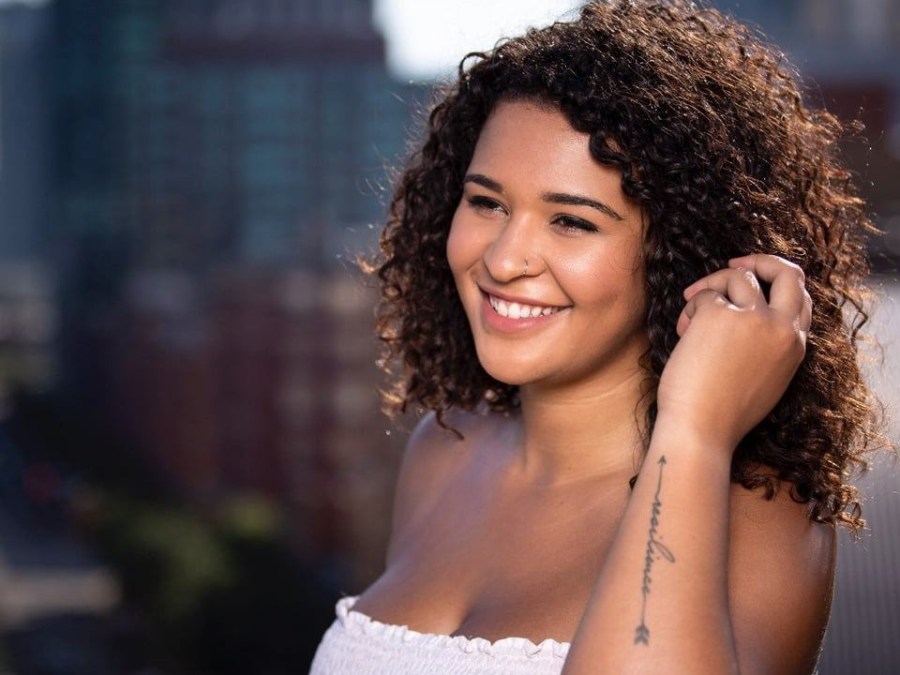
Would it surprise you to know that question I have been asked most in my life has been “What are you?” or “Where are you actually from?” The next question or comment often is about my hair “Wow, I didn’t know it could get so straight”, or “it’s a bit wild today you should tame your nappy hair” and of course “It feels so soft and bouncy” – from people who physically reach out and touch my curly hair without any permission from me at all. You read that right – strangers, coworkers, acquaintances, feel that it is appropriate to touch my curly hair without out my consent. Now, I would love to tell you that I have been able to stand up for myself and tell these people that this behaviour it is not okay, but there has always been this underlying fear that I will suffer a consequence as a result.
For example, I had many educated and worldly friends who had no issue using the “N word” openly around me, and when I would speak up, many of them would spout their justifications. They would tell me that it’s “just a word “and if rappers are using it than so can they. The idea that I was offended by their uses of this word was unfathomable and dismissed because I “didn’t really count as a black” person, I am only half and I like to listen to country music. I can honestly say that I have lost friends over the years because they felt my ask to not use that particular word was completely unfounded.
Working in my university bar, I had patrons call out ” Sheniqua or Tenisha” to get my attention as the only black woman behind the bar, because in their mind yelling out a random “Black sounding name” was an okay way to get my attention. I laughed it off because not one person in the room had a problem with this. Some men who have talked about getting their “black card” by dating me, so openly and without shame, while others who have come from such white privilege that they can’t possibly understand or believe that I have been treated differently in my life. That seeing mixed race women in movies and in TV shows, even commercials as an adult has been amazing for me personally, because when I was growing up there were no adults that looked like me, I felt like the minority among minorities.
In my experience in the corporate world, I have had coworkers that had only spoken to me on the phone discover my ethnicity at a later date and comment that I was so “well-spoken” that they assumed I was white. I have worked in a department of close to 100 employees with a total of 3 other people of colour throughout my employment, where I had a direct supervisor tell me that the way that I carry myself was “too much”, make comments about my hair, my body type and that I needed to fit in with the culture because “Corporate Toronto is a small place and my reputation would follow” if I didn’t fall in line.
This last one in particular, echoed Sasha Exeter’s experience with Jessica Mulroney. The fact that anyone in a position of power and privilege feels so comfortable making threats to a person of colour’s career and livelihood is a prime example of the racsim that unfortunately is very common in Corporate Canada. Why have so many people of colour not spoken up in these situations? First of all, it needs to be said that threatening anyone is a problem, but here’s another layer in this situation: to have a white supervisor/person of power feel so confident that their words hold more power than that of a person of colour that they can threaten them, creates a sense of fear that we don’t obey they have the power to ruin your life. I am so grateful that Sasha Exeter chose to speak up and share this experience because truly it is not okay and has made me feel less alone in the experience. Touching my curly hair, especially in a corporate setting is not okay, and yet somehow because I am “exotic” and not white, I have to explain to coworkers and supervisors that my natural hair is not on my head for them to touch as they please.
I am not here trying to tell you that the level of racism and violence that has been occurring in the United States is remotely the same as what I have experienced and observed around Canada, but I do want you to know that there IS racism in Canada, but it is so systemic and often unconscious that many wonderful, loving people who really do mean well, are part of the problem.
I won’t sit here and tell you what to do, and I have seen a lot of performative things on social media that I don’t personally feel are genuine, but I really do believe that any real change starts at home. So if you really want to make a difference; educate yourself, read books from credible authors, watch documentaries, learn about systemic racism (I am happy to make a few recommendations). Unlearn some of these unconscious judgments and stereotypes that have been hammered into us and be the change you want to see in the world.
 Dresses every damn day
Well said, well written and well needed!! I look forward to more of what you have to say!! Well done❤️
LikeLiked by 1 person